New AI-Powered Duplicate Detection for Western Blot Images

By  Sofiia |
New AI-Powered Duplicate Detection for Western Blot Images

Our team at Imagetwin built a novel duplicate detection technology and, as a first step, used it to develop a new method for finding duplicated Western blot images. The method works for all duplicate types:  Western blot duplicates within a single image, between images in the same paper, and between images across different papers. The method is robust to cropping, resizing, color changes, contrast shifts, rotation, and flipping. Most importantly, it reliably distinguishes between Western blots that look similar by chance and genuine duplicates, virtually eliminating false positives.

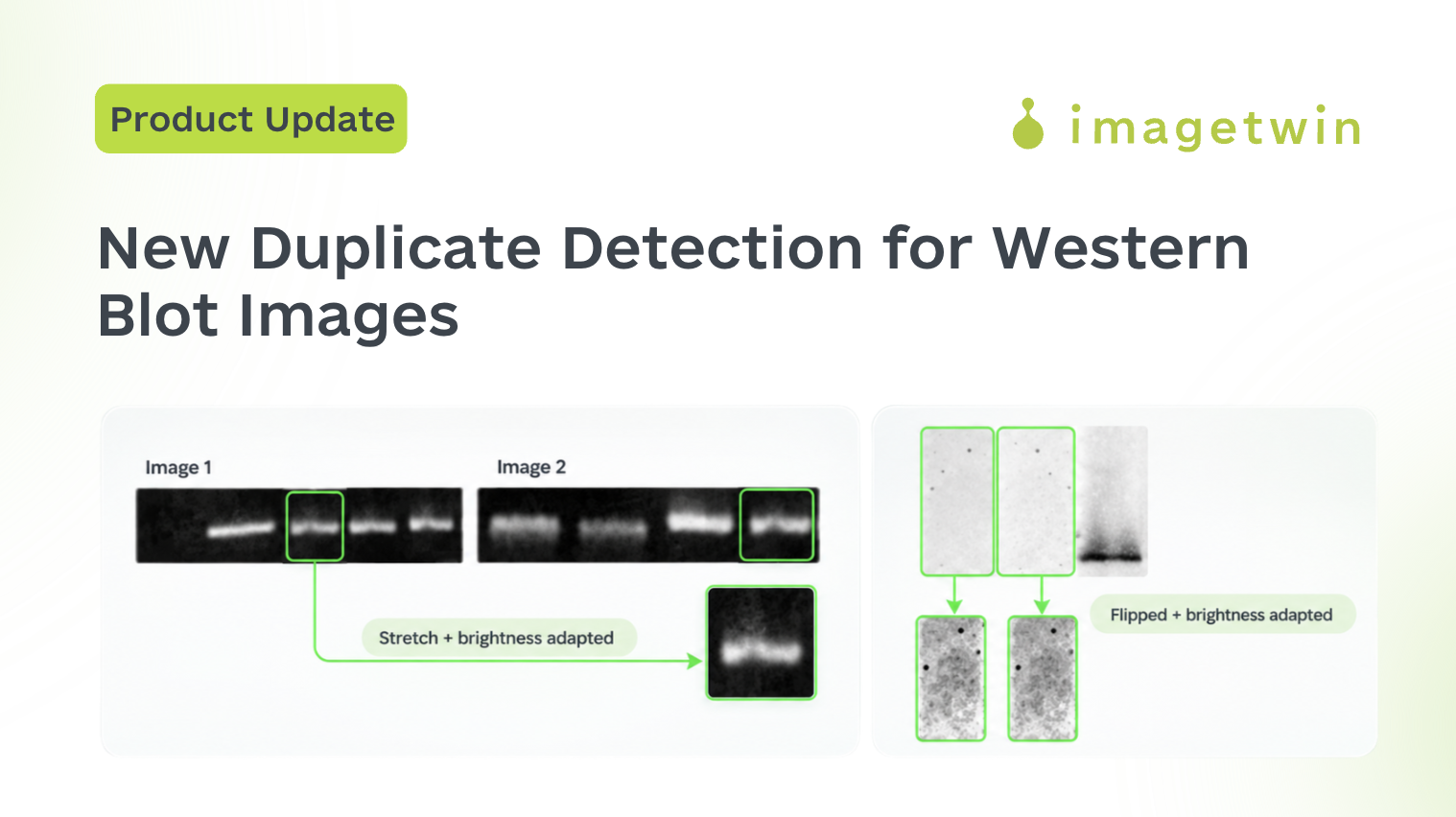
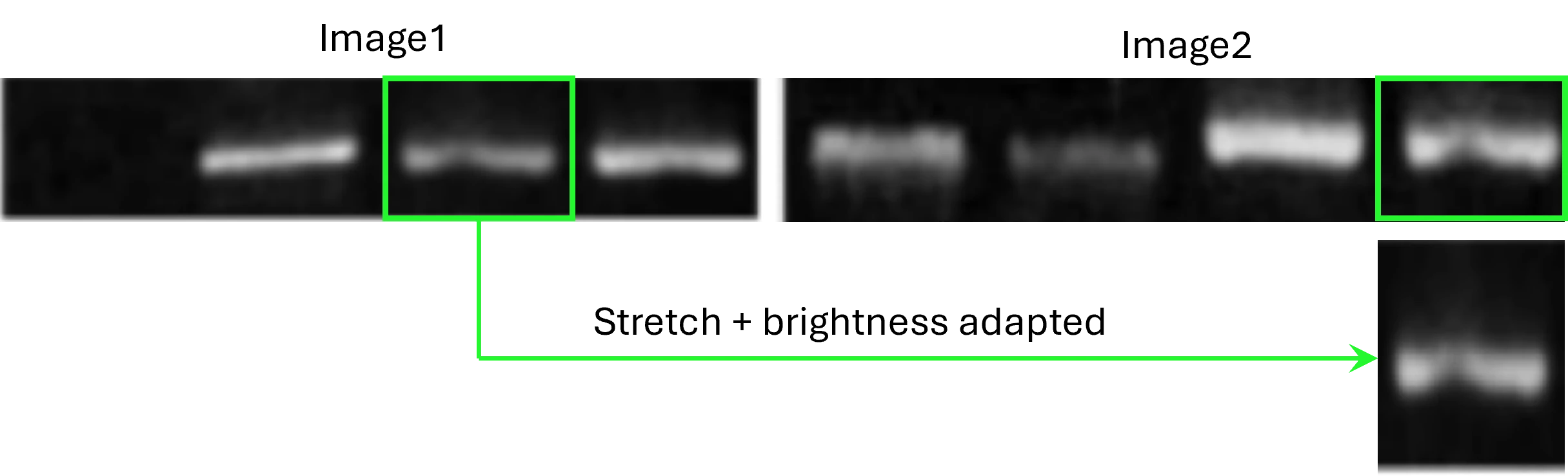
Below are a few real examples of the manipulations this method is built to catch, drawn from our testing:

Example 1: Western blot duplicate detected via vertical stretching and brightness adjustment
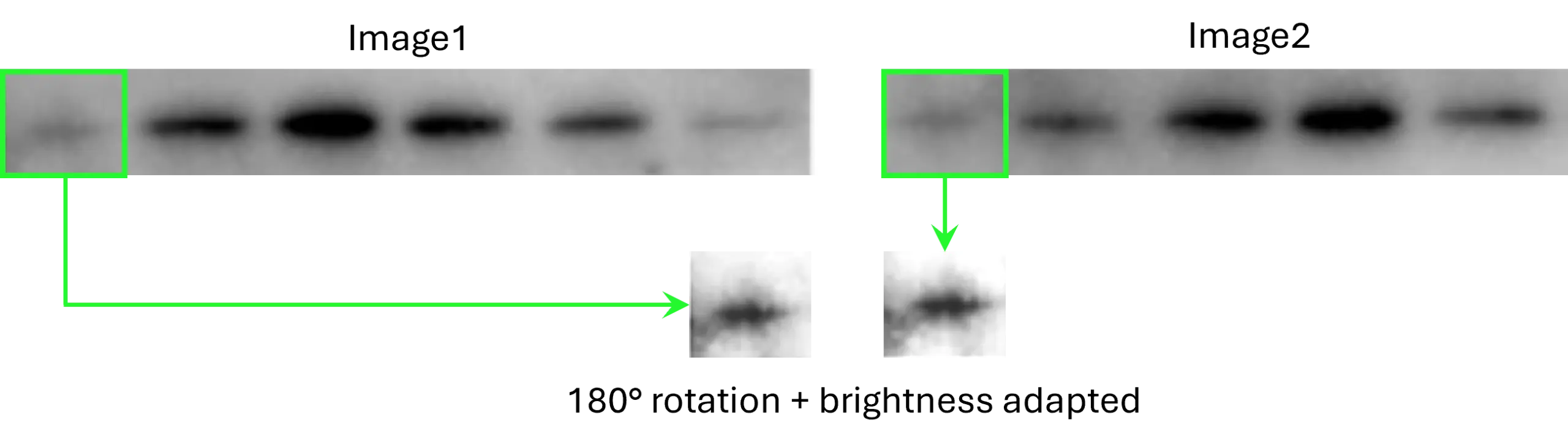
Example 2: Western blot duplicate detected after 180° rotation and brightness adjustment
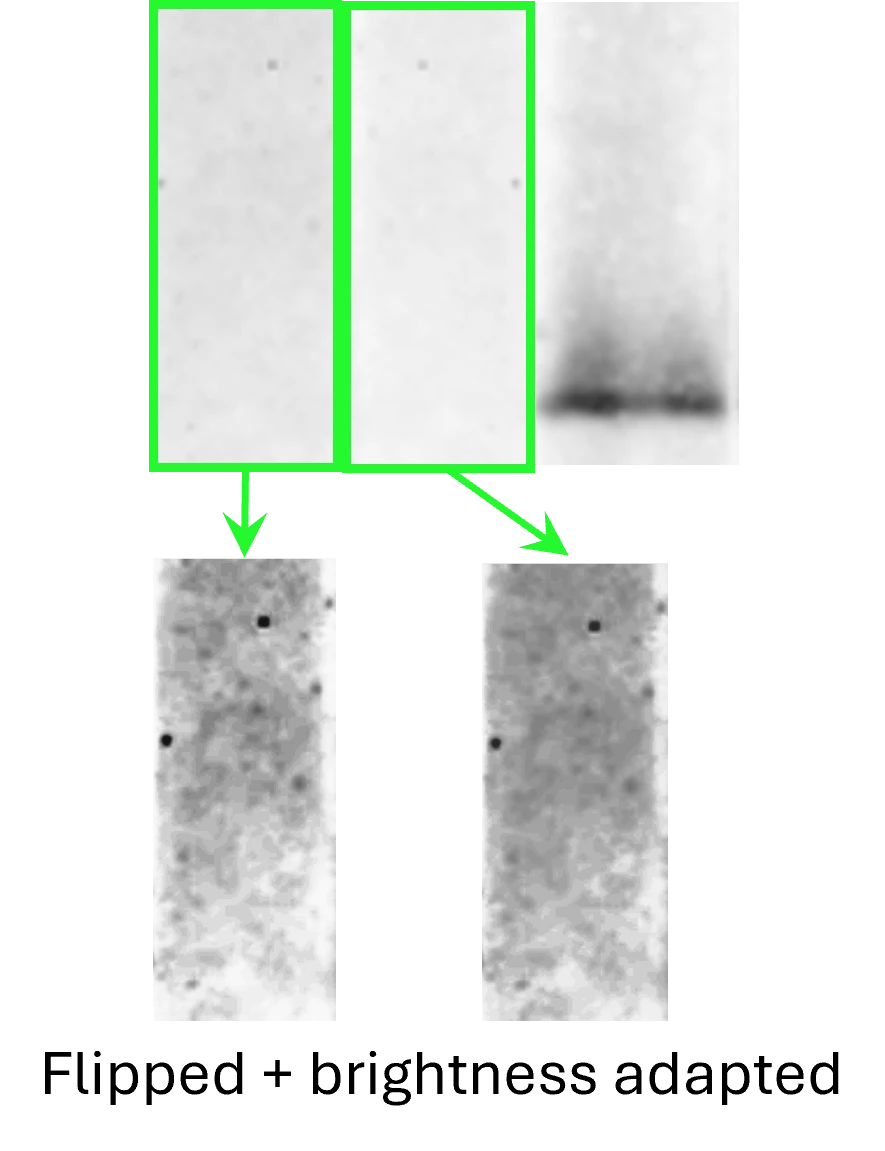
Example 3: Duplicated background region in a Western blot detected after flipping and brightness adjustment

Evaluation Results

To measure performance, we built a test set from real-world Western blot duplicates reported on PubPeer, mixed in with a large pool of distractor images that are not duplicates. We didn’t use any of this data for training, so the results reflect unbiased, held-out performance.

The distractors weren’t picked at random; we used hard mining to select images that already looked similar to each other. A random pool wouldn’t generate enough near-miss cases to properly stress-test false alarms, so this is a deliberately tough test.

In total, we evaluated the new method against 597 confirmed duplicates from PubPeer and 5,860 hard-mined distractor images. The result: 95.8% of real duplicates caught, with a false alarm rate of just 0.11%.

Even the small number of false alarms were extremely close calls. In our own review, it took real effort to spot the subtle differences that made them non-duplicates in the first place.

What's Coming Next

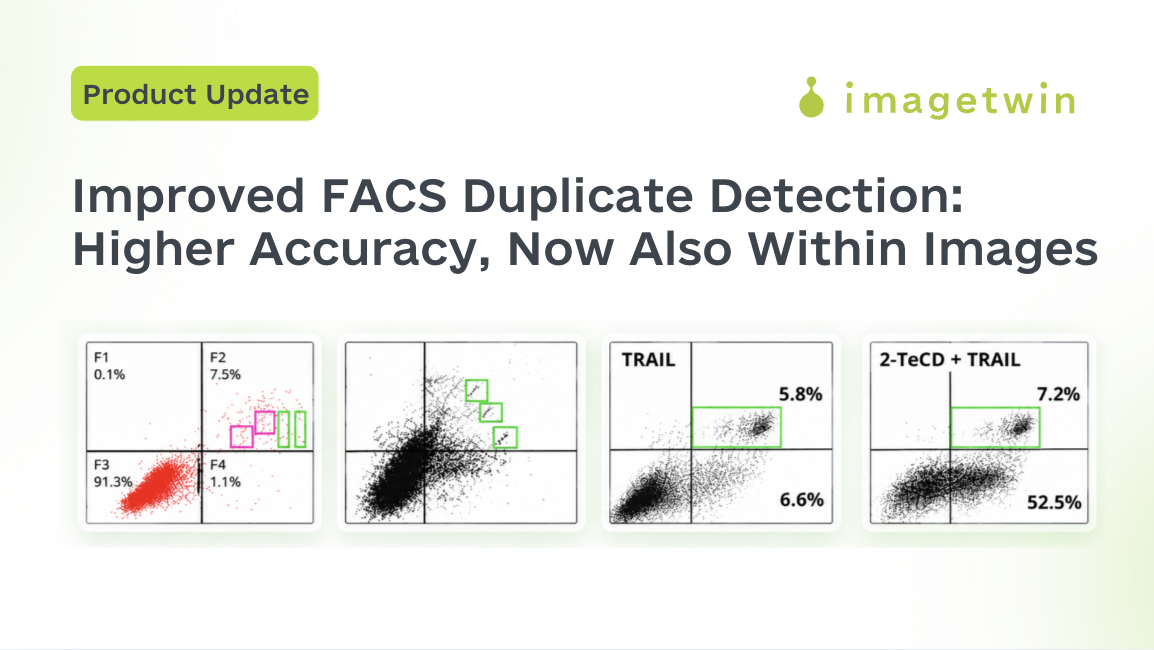
Over the coming weeks, we’re rolling out the same underlying technology to FACS plots, microscopy images, light photography, and XRD data, aiming to achieve similarly strong detection rates across those image types.

Frequently asked questions

Yes, and here is why: on a held-out test set of 597 confirmed PubPeer duplicates and 5,860 hard-mined distractor images, our new method catches 95.8% of real duplicates with a 0.11% false alarm rate, it is the strongest result we’ve measured for this specific problem.

The method catches duplicates within a single image, between images in the same paper, and across different papers, even when the duplicated region has been cropped, resized, recolored, contrast-adjusted, rotated, or flipped.

No, it flags likely duplicates for a human reviewer to confirm, the same way our other detection methods work. It’s built to catch what’s easy to miss at scale, and to support human judgement.

Protect Research Integrity with Confidence

Start using Imagetwin to detect image integrity issues and support trustworthy research publishing.

Frequently asked questions

Imagetwin is software designed to detect integrity issues in figures of scientific articles. It helps identify inappropriate manipulations and duplications in various figure types, including western blots, microscopy images, and light photography.

Imagetwin is beneficial for researchers, peer reviewers, journal editors, and institutions aiming to uphold the quality and trustworthiness of scientific publications by ensuring the integrity of visual data.

Users can upload a PDF or multiple image files to Imagetwin. The software then scans the content using algorithms and vast databases of published scientific figures to detect potential integrity issues. Within seconds, results are presented through a web interface, highlighting any detected problems for review.

Yes, we prioritize data privacy and security, ensuring that all image indexing and exchanges are protected with industry-standard encryption and security best practices.

Create an account and start using Imagetwin immediately. We prepared a few example documents that you can scan free of charge.

Yes, Imagetwin is a powerful addition to the peer-review process. It automatically detects various integrity issues, which can then be quickly verified by a reviewer, enhancing the efficiency and accuracy of the review process. Imagetwin also partners with industry leaders in publishing and scholarly workflows, such as Morressier, TNQ Technologies and more, transforming how research is submitted, reviewed and published.

For more detailed guidance on using Imagetwin, contact our support team through our Contact Us page.