New Algorithm for Splicing Detection

By  Markus |
New Algorithm for Splicing Detection

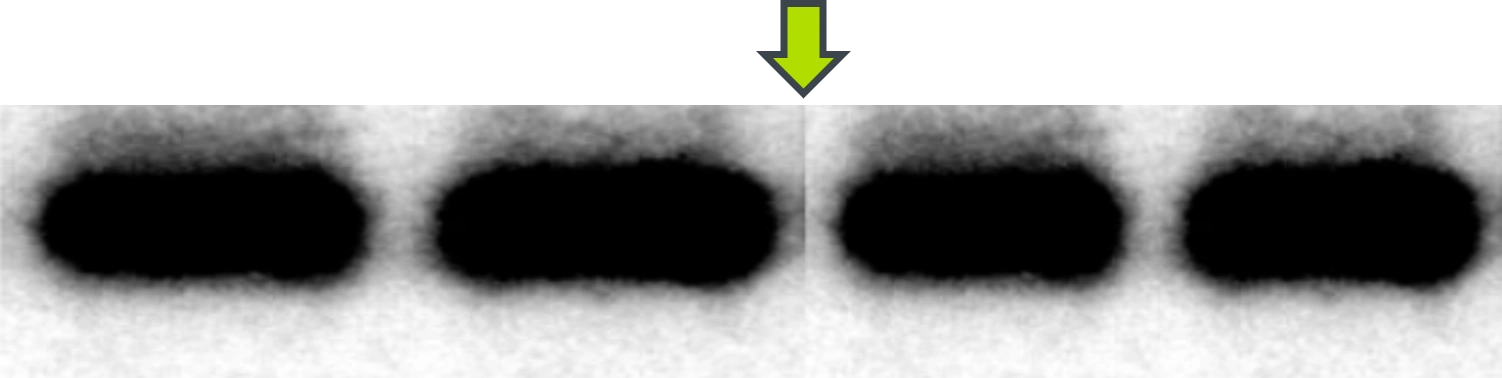
Imagetwin now detects splicing seams in gel band images, such as western blots. A western blot consists of several lanes, whereas the procedure of removing, inserting, or re-assembling individual lanes is known as splicing. Splicing is not necessarily inappropriate behaviour, especially when declared. However, in some cases, splicing is used to manipulate the original image data, and it is critical to detect these cases. The splicing detection is accessible through our web application and the API, helping you to identify splicing seams quickly and effectively.

Forensics toolbar

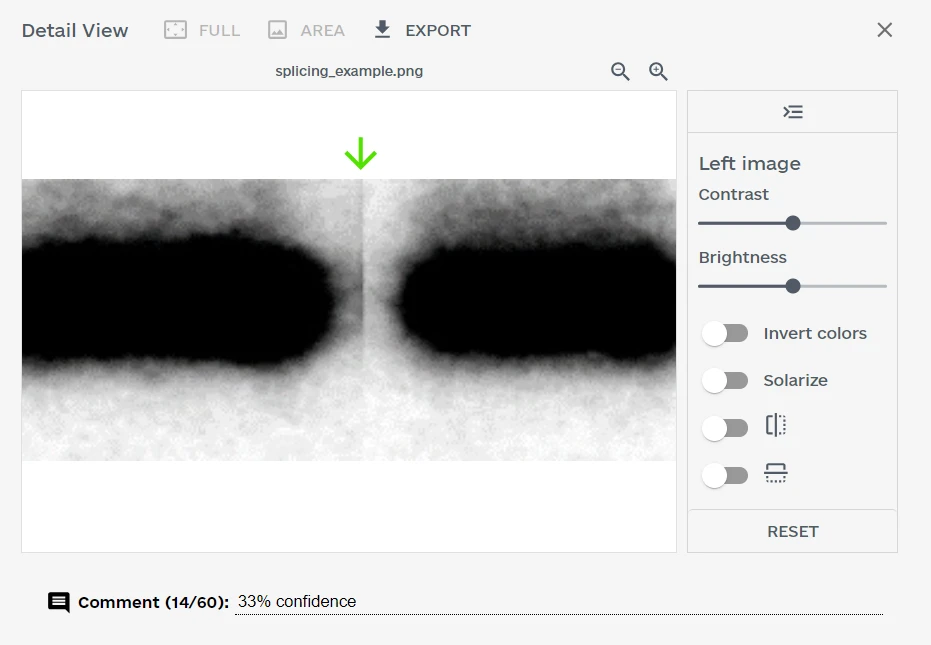
Whenever a gel band image is input into our software, the image is screened for potential splicing seams. Findings are then presented in the web application with a score indicating how confident our machine learning model is in their prediction. A finding can be further investigated in the detail view using the new forensics toolbar. The forensics toolbar allows for altering the image, such as changing the brightness or the contrast. This helps to improve the visibility of details that are difficult to see by eye. The forensics toolbar might also be useful for other findings, such as improving visualizations of duplicates.

A splicing seam is shown in the detail view with the forensics toolbar on the right.

Detection accuracy

We evaluated the splicing detection algorithm in terms of accuracy and false positives. To measure accuracy, we tested the algorithm on 157 spliced western blots recently posted on PubPeer. The software correctly identified and located the splicing seams in 127 of the 157 images (81% accuracy). To measure the false positive rate, we applied the algorithm to 500 western blots randomly sampled from papers published from 2010 to 2023. In total, 15 of the 500 images were flagged, which we further analyzed. Of the 15 flagged images, 7 were actually spliced, 2 were incorrectly flagged as spliced, and 6 were low-quality images difficult to assess because of pixelated areas and compression artefacts (e.g., JPG).

Data used for evaluation
Data Number of western blots
Spliced western blots sampled from PubPeer 157
Western blots sampled from publications from 2010 to 2023 500

Protect Research Integrity with Confidence

Start using Imagetwin to detect image integrity issues and support trustworthy research publishing.

Frequently asked questions

Imagetwin is software designed to detect integrity issues in figures of scientific articles. It helps identify inappropriate manipulations and duplications in various figure types, including western blots, microscopy images, and light photography.

Imagetwin is beneficial for researchers, peer reviewers, journal editors, and institutions aiming to uphold the quality and trustworthiness of scientific publications by ensuring the integrity of visual data.

Users can upload a PDF or multiple image files to Imagetwin. The software then scans the content using algorithms and vast databases of published scientific figures to detect potential integrity issues. Within seconds, results are presented through a web interface, highlighting any detected problems for review.

Yes, we prioritize data privacy and security, ensuring that all image indexing and exchanges are protected with industry-standard encryption and security best practices.

Create an account and start using Imagetwin immediately. We prepared a few example documents that you can scan free of charge.

Yes, Imagetwin is a powerful addition to the peer-review process. It automatically detects various integrity issues, which can then be quickly verified by a reviewer, enhancing the efficiency and accuracy of the review process. Imagetwin also partners with industry leaders in publishing and scholarly workflows, such as Morressier, TNQ Technologies and more, transforming how research is submitted, reviewed and published.

For more detailed guidance on using Imagetwin, contact our support team through our Contact Us page.