ALPSP Award for Innovation in Publishing 2026 Winner · Supporting Research Integrity
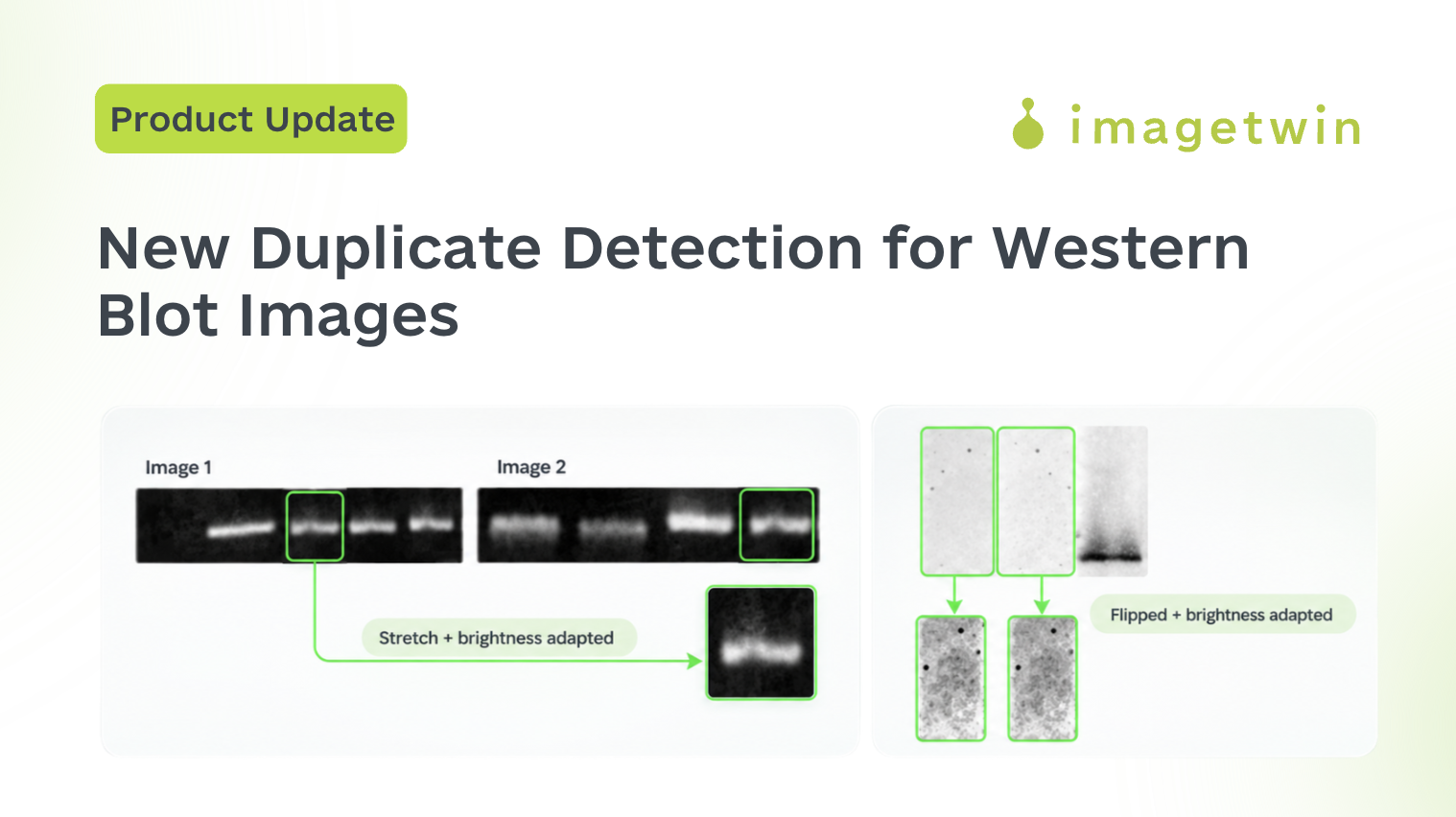
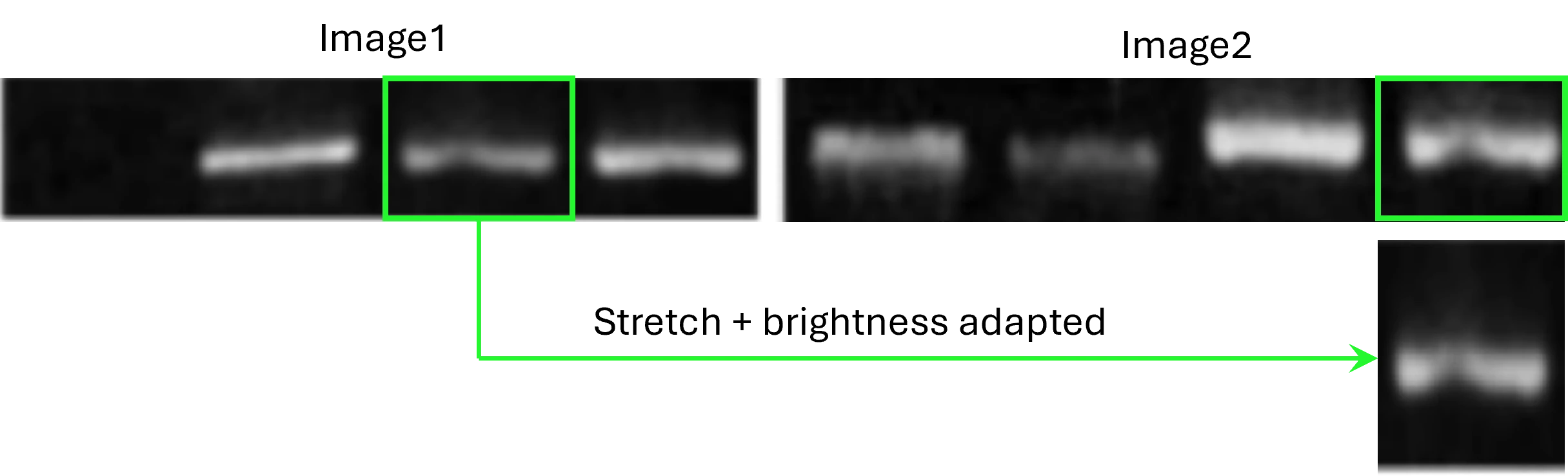
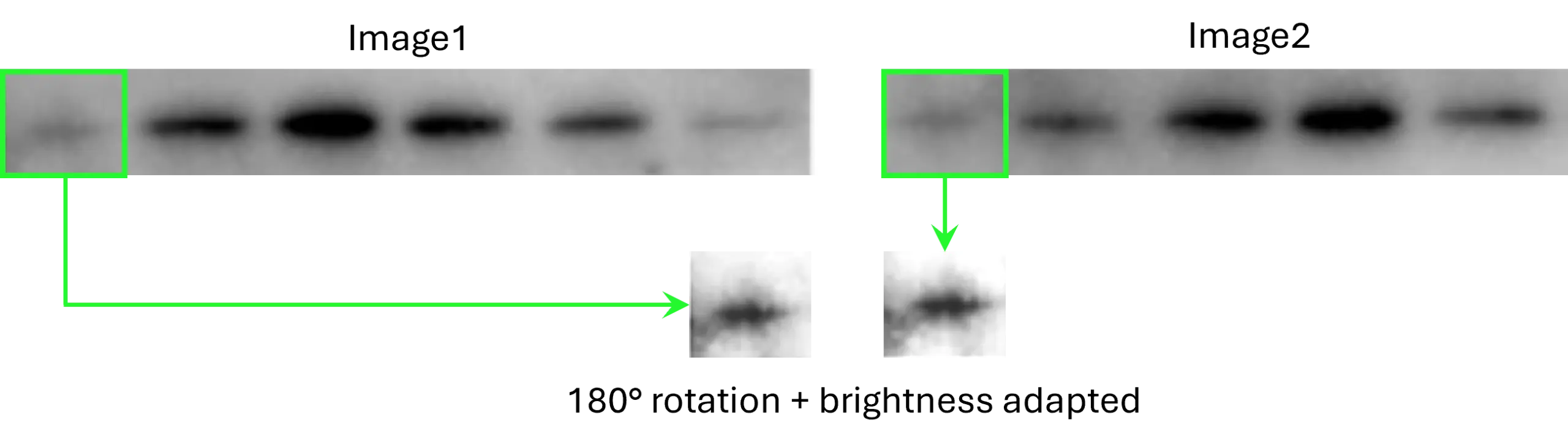
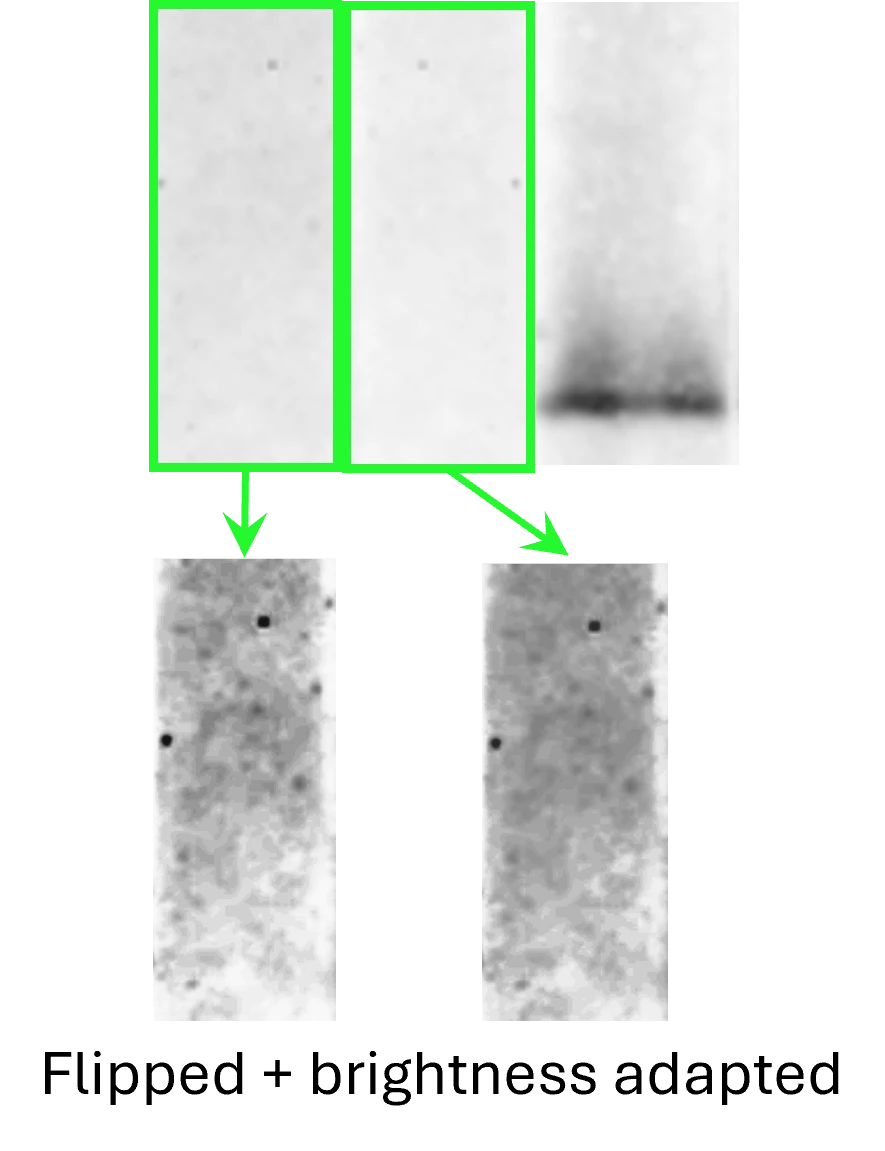
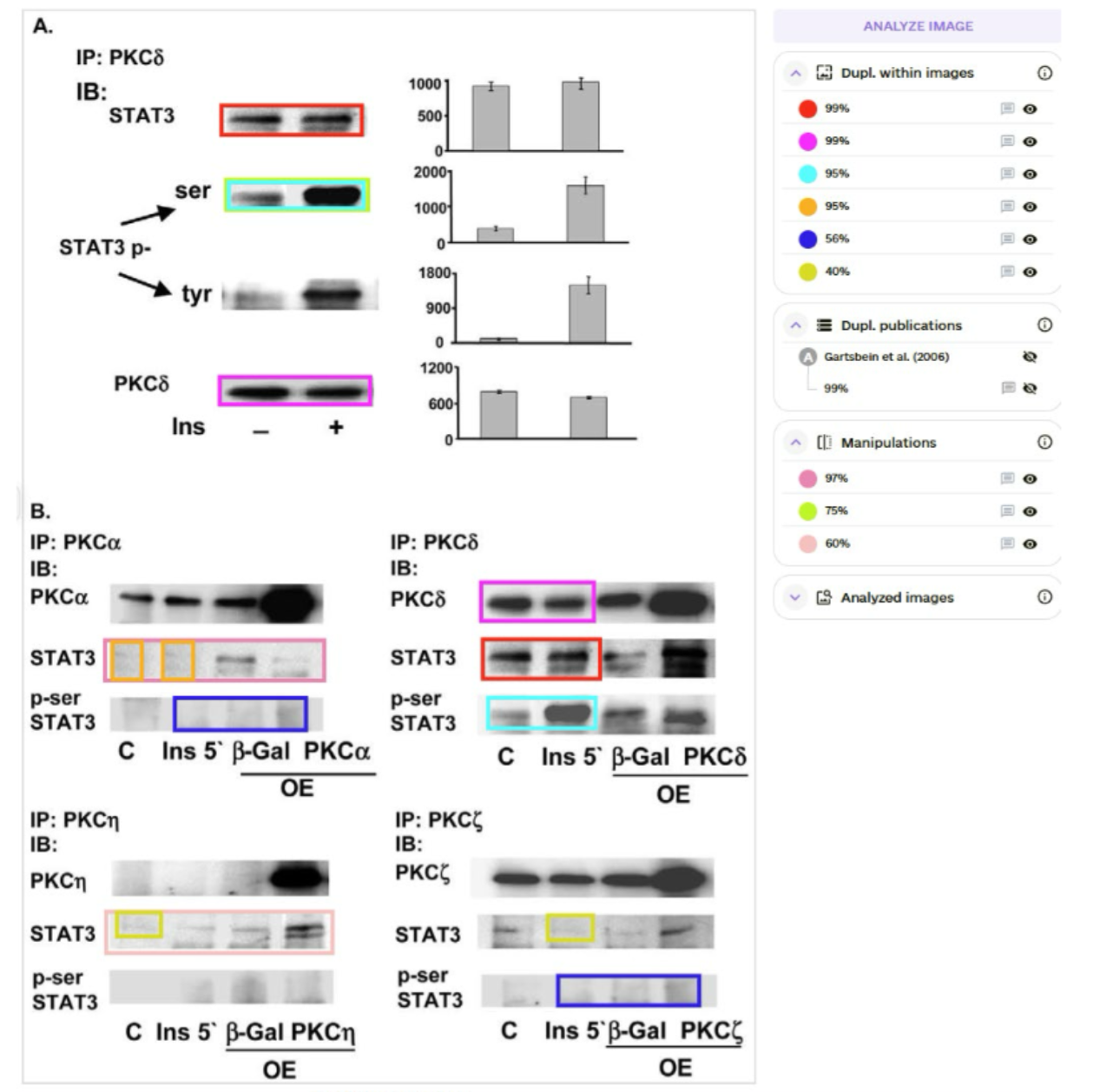
Our team at Imagetwin built a novel duplicate detection technology and, as a first step, used it to develop a new method for finding duplicated Western blot images. The method works for all duplicate types: Western blot duplicates within a single image, between images in the same paper, and between images across different papers. The method is robust to cropping, resizing, color changes, contrast shifts, rotation, and flipping. Most importantly, it reliably distinguishes between Western blots that look similar by chance and genuine duplicates, virtually eliminating false positives.
Below are a few real examples of the manipulations this method is built to catch, drawn from our testing:
To measure performance, we built a test set from real-world Western blot duplicates reported on PubPeer, mixed in with a large pool of distractor images that are not duplicates. We didn’t use any of this data for training, so the results reflect unbiased, held-out performance.
The distractors weren’t picked at random; we used hard mining to select images that already looked similar to each other. A random pool wouldn’t generate enough near-miss cases to properly stress-test false alarms, so this is a deliberately tough test.
In total, we evaluated the new method against 597 confirmed duplicates from PubPeer and 5,860 hard-mined distractor images. The result: 95.8% of real duplicates caught, with a false alarm rate of just 0.11%.
Even the small number of false alarms were extremely close calls. In our own review, it took real effort to spot the subtle differences that made them non-duplicates in the first place.
Over the coming weeks, we’re rolling out the same underlying technology to FACS plots, microscopy images, light photography, and XRD data, aiming to achieve similarly strong detection rates across those image types.
Yes, and here is why: on a held-out test set of 597 confirmed PubPeer duplicates and 5,860 hard-mined distractor images, our new method catches 95.8% of real duplicates with a 0.11% false alarm rate, it is the strongest result we’ve measured for this specific problem.
The method catches duplicates within a single image, between images in the same paper, and across different papers, even when the duplicated region has been cropped, resized, recolored, contrast-adjusted, rotated, or flipped.
No, it flags likely duplicates for a human reviewer to confirm, the same way our other detection methods work. It’s built to catch what’s easy to miss at scale, and to support human judgement.
Aries Systems Corporation, a leading provider of workflow management technologies for the scholarly publishing community, and Imagetwin, a trusted AI-powered image integrity software for research, are pleased to announce their partnership to strengthen trust in publishing through streamlined research image screening.
Research integrity is an increasingly complex and critical challenge within scholarly publishing. Ensuring research figures are credible within each article is typically a highly manual and time-consuming bottleneck for journals, and visual review by the human eye often fails to catch problematic cases. Without advanced support and additional resources, inconsistent image integrity investigations can result in frustrating delays and expensive post-publication corrections. To automate this process and minimize downstream risk, Aries Systems and Imagetwin have partnered to integrate their AI-powered image analysis software with Editorial Manager® (EM), the leading manuscript submission and peer review tracking system.
Upon submission and revision, articles in EM are automatically scanned by Imagetwin within seconds against their database of 160+ million published figures to identify potential instances of manipulation, duplication, plagiarism, or AI-generated content. From their existing workflow in EM, Editors can seamlessly access Imagetwin’s generated confidence score and sophisticated forensic toolbox for detailed examination of flagged images. Publishers also have the option to create a private repository of their own past papers to screen submissions against that archive alongside the full Imagetwin database – further promoting transparency and legitimacy in scholarship.
Pierre Montagano, Aries’ Director of Business Development says:
“Supporting trust in publishing remains a strategic priority for Aries, and we are thrilled to bolster this commitment as Imagetwin joins our suite of research integrity solutions within the Aries ecosystem. This powerful integration enables the detection of image issues early, consistently, and efficiently at scale – relieving editorial pressure and driving confidence in manuscript screening.”
Patrick Starke, Imagetwin’s Co-Founder and CEO adds to that:
“Editorial Manager is where the majority of manuscript decisions happen, so bringing image integrity screening directly into that workflow is a natural fit. This partnership means editors get flagged issues before publication, not after, which is exactly where the industry needs to be heading.”
Aries Systems transforms and revolutionizes the delivery of high-value content to the world. We are committed to providing highly customizable, flexible, and innovative workflow solutions designed to help enhance the discovery and dissemination of human knowledge. Publish faster, publisher smarter, with Aries Systems.
Within seconds of submission, Imagetwin checks manuscript figures against a database of 160+ million published images to flag potential manipulation, duplication, plagiarism, or AI-generated content. Editors then get a confidence score and access to Imagetwin’s forensic toolbox directly from their EM dashboard for closer review of any flagged figures.
Imagetwin has integrated its AI-powered image integrity screening directly into Editorial Manager® (EM), the manuscript submission and peer review platform from Aries Systems. Manuscripts submitted or revised in EM are automatically scanned by Imagetwin, so editors can review flagged image issues without leaving their existing workflow.
Yes. Publishers can build a private repository of their own previously published papers and screen new submissions against that archive in addition to the full Imagetwin database, useful for catching duplication or self-plagiarism within a publisher’s own journals.
X-ray diffraction plots were considered nearly impossible to screen for duplication, until recently. In our recent webinar, Imagetwin co-founder and CTO Marcus Zlabinger sat down with Mu Yang, PhD, a behavioral neuroscientist at Columbia University Medical Center who has become one of the most active research integrity sleuths working in XRD, glass, and spectra images. She walked through how she spots duplicated traces by eye, and Marcus shared what Imagetwin’s new automated XRD detection feature found when it was pointed at thousands of recent papers.
XRD is used to confirm that a material’s crystal structure matches what a paper claims, and the peaks, widths, and baseline noise in a trace all carry real information. That also makes XRD data relatively context-poor compared to, say, a microscopy image, which is exactly why it took so long for any automated tool to reliably flag duplication in it. Peaks and baseline noise are the two things Mu Yang sees edited most often.
Before getting into specific cases, Mu Yang laid out the basics she checks on every plot:
The three issues she flags most often are:
On top of that, three visual cues tend to give away an edited plot:
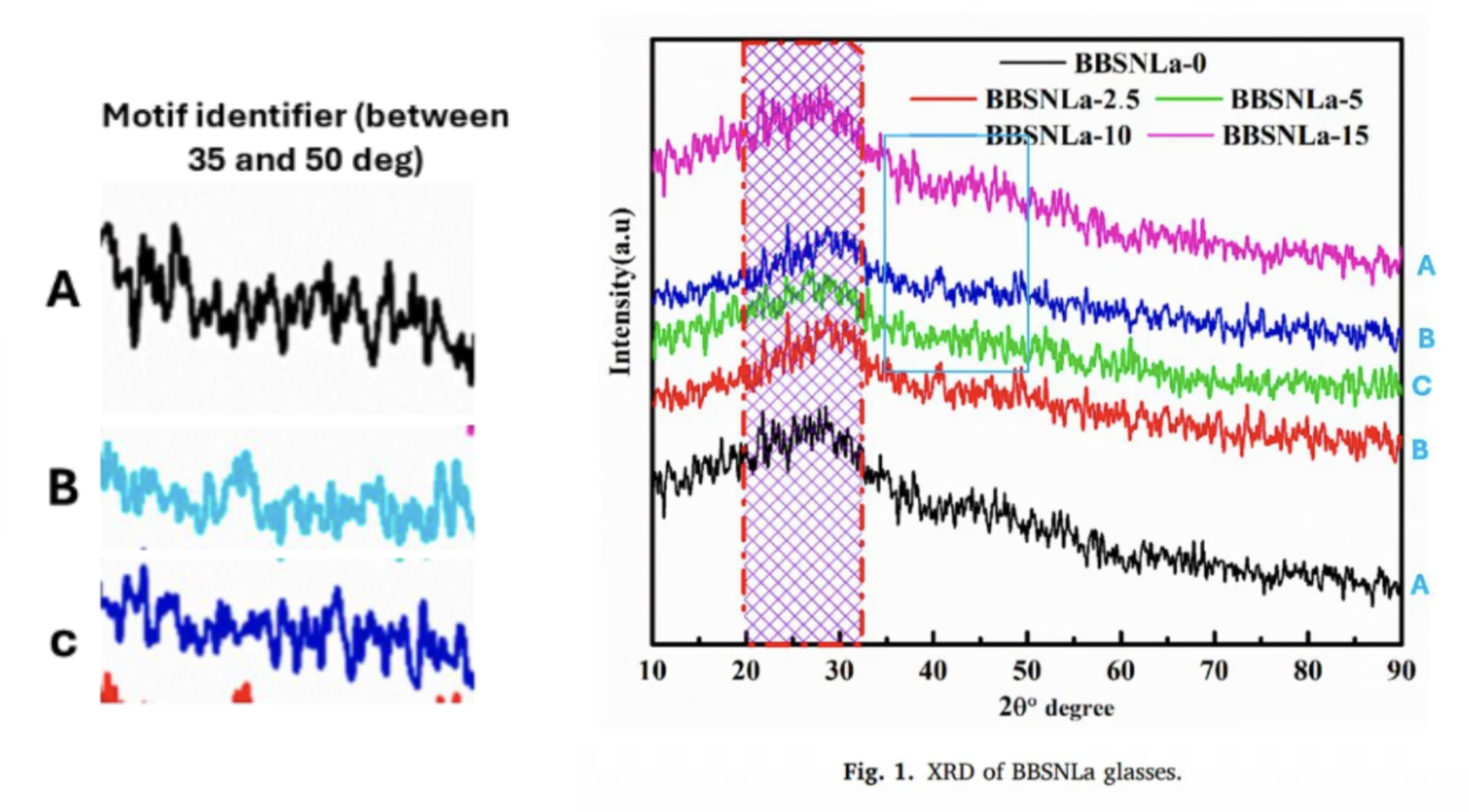
The core technique: anchor your eyes on one small section of the plot, say around 2-theta = 40 degrees, and run them straight down across all traces rather than scanning the whole figure at once.
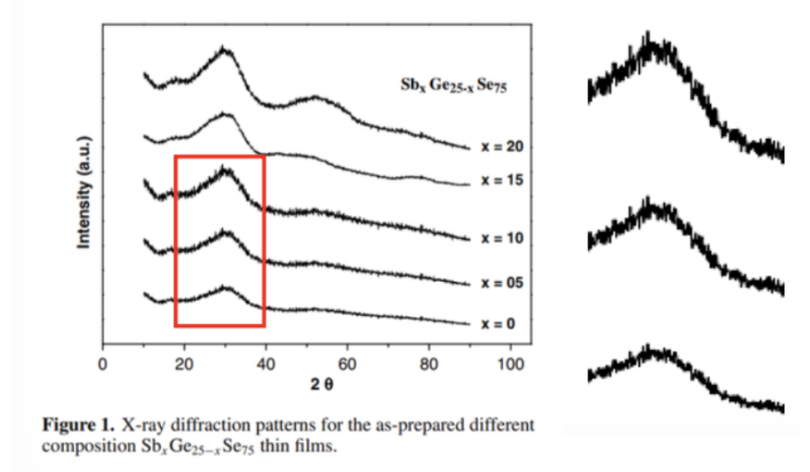
The trickier lesson: traces that look completely different can still share the same underlying data, just with color, intensity, or waveform shape altered.
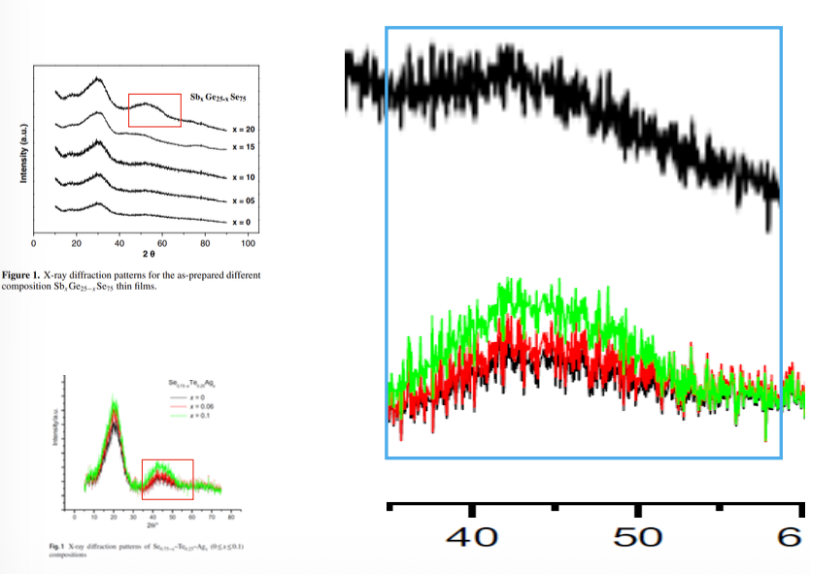
In one case study, she found just three recurring trace “motifs” reused across 72 different papers, once she built a visual key to spot them.
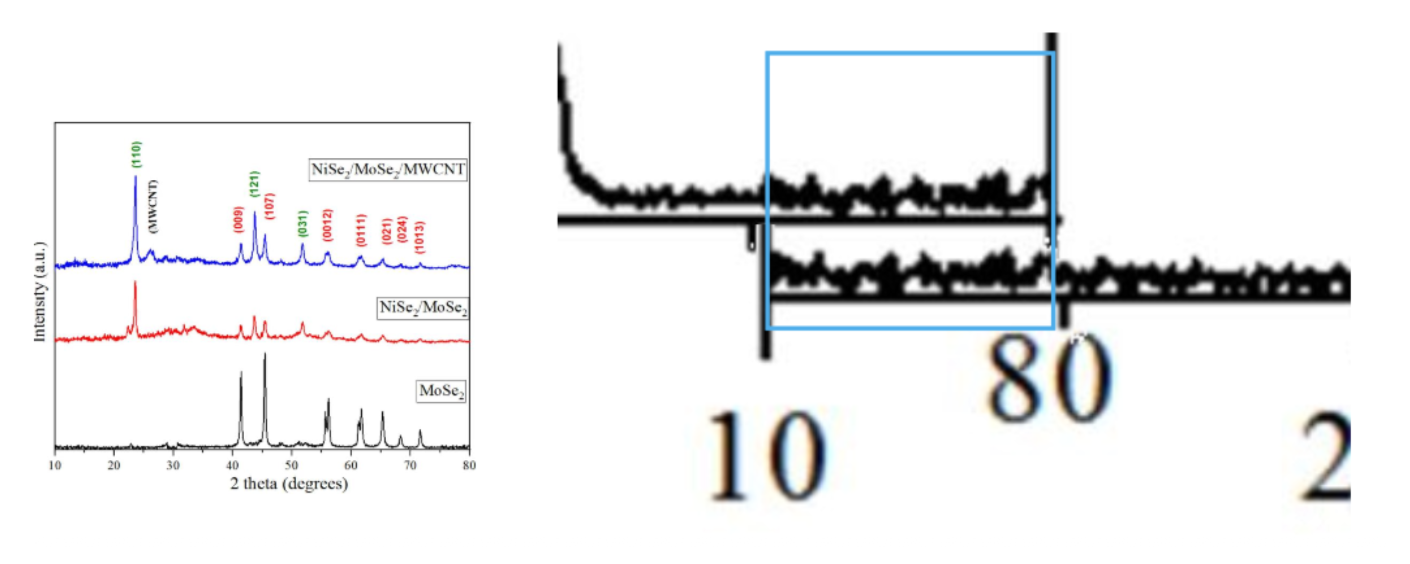
Patchwork is easiest to catch once you zoom into the image file itself, not the PDF preview.
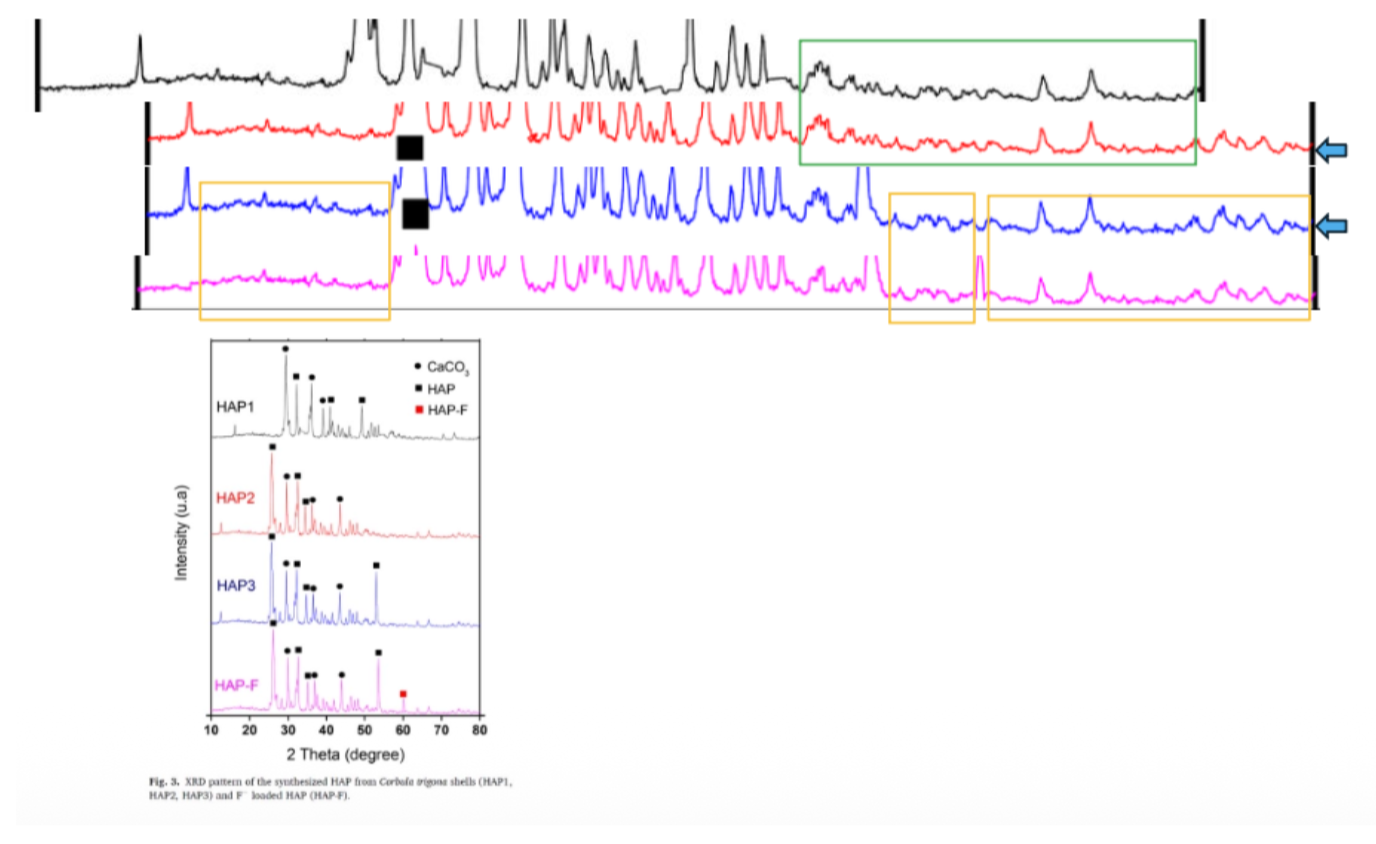
Two more visual tells: pay attention to where traces end, since editors tend to focus effort on the middle of a figure and get sloppy at the edges, and treat unusually thick traces with suspicion, since a thick line makes it easier to hide a seam.
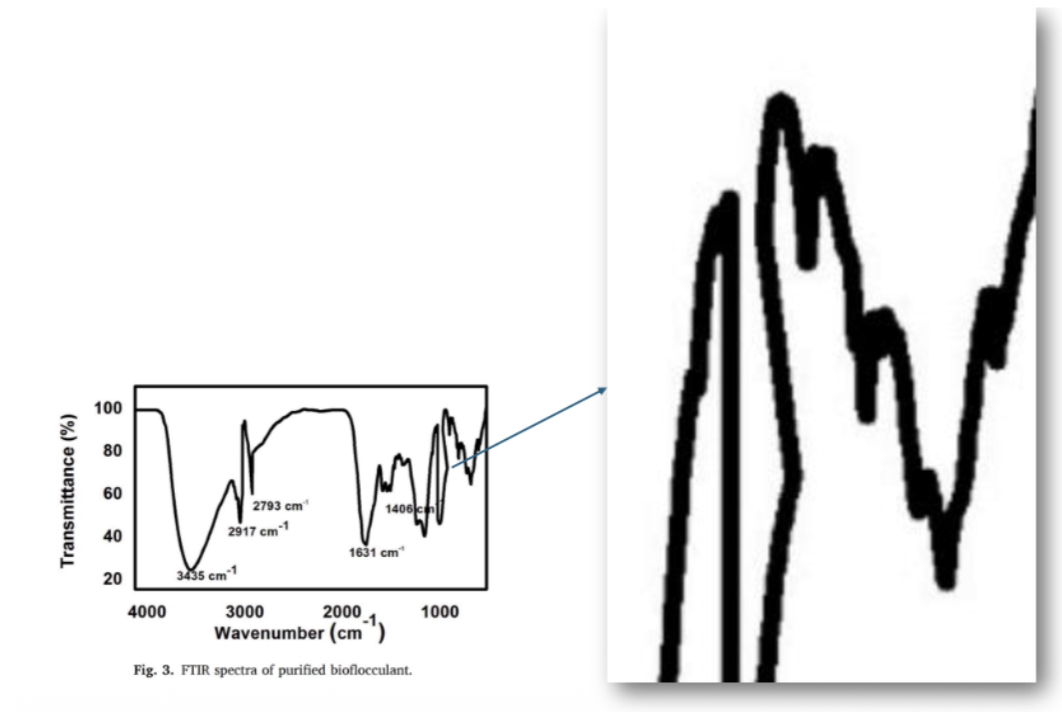
And then there’s the hand-drawn category, images that clearly didn’t come from an instrument but don’t technically violate any named rule, until they do, like a trace that abruptly reverses direction.
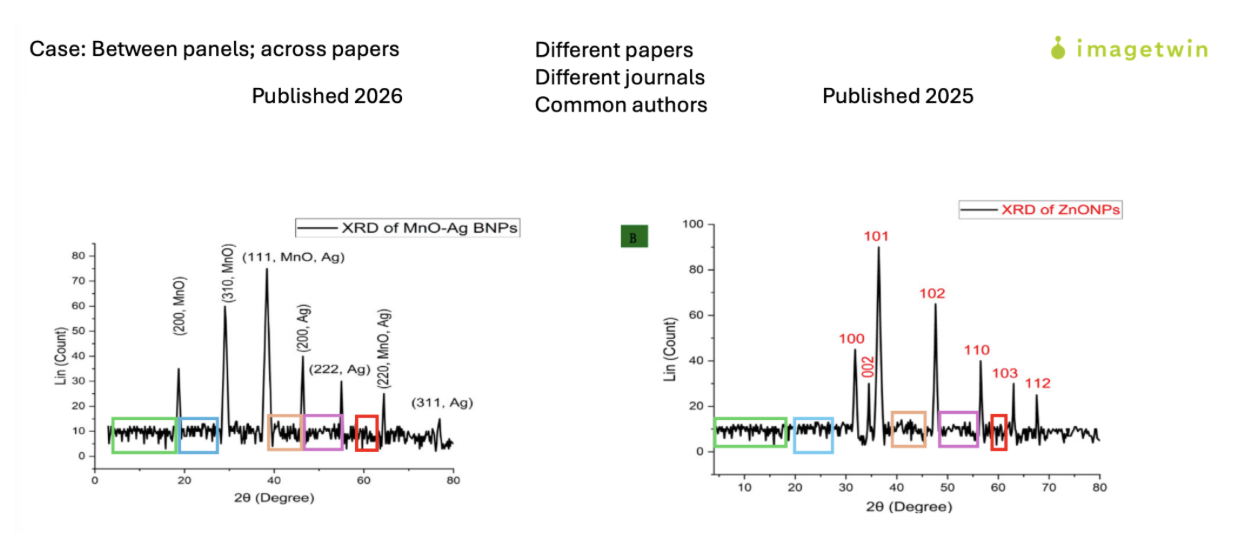
Marcus shared results from scanning 4,716 papers with XRD plots published in 2026: the new cross-paper reference database of over 374,000 XRD plots flagged 428 same-panel matches, 181 same-paper cross-panel matches, and 43 cross-paper matches, including cases spanning different journals with shared authors.
On the roadmap:
Usually, automated image integrity screening is associated with Western blots, microscopy panels, or FACS plots. Those image types carry the visual evidence in biomedical research, and they were the first to attract systematic fraud.
But scientific publishing extends well beyond the life sciences. Materials science, chemistry, physics, engineering, these fields rely on their own visual evidence: XRD patterns, spectra, chromatography traces, line graphs. Figures that look nothing like a blot, but should be looked into just as much.
Imagetwin has detected integrity issues across all of these figure types for over two years. We have put together a couple examples to show you what it looks like in practice, and what our latest technology update improved even further: detection of duplicate areas hidden within a single trace or plot.
Imagetwin was built to screen scientific figures at scale. We started with detecting duplication or manipulation in Western blots and microscopy images, and then expanded to cover the full range of figure types submitted to journals today.
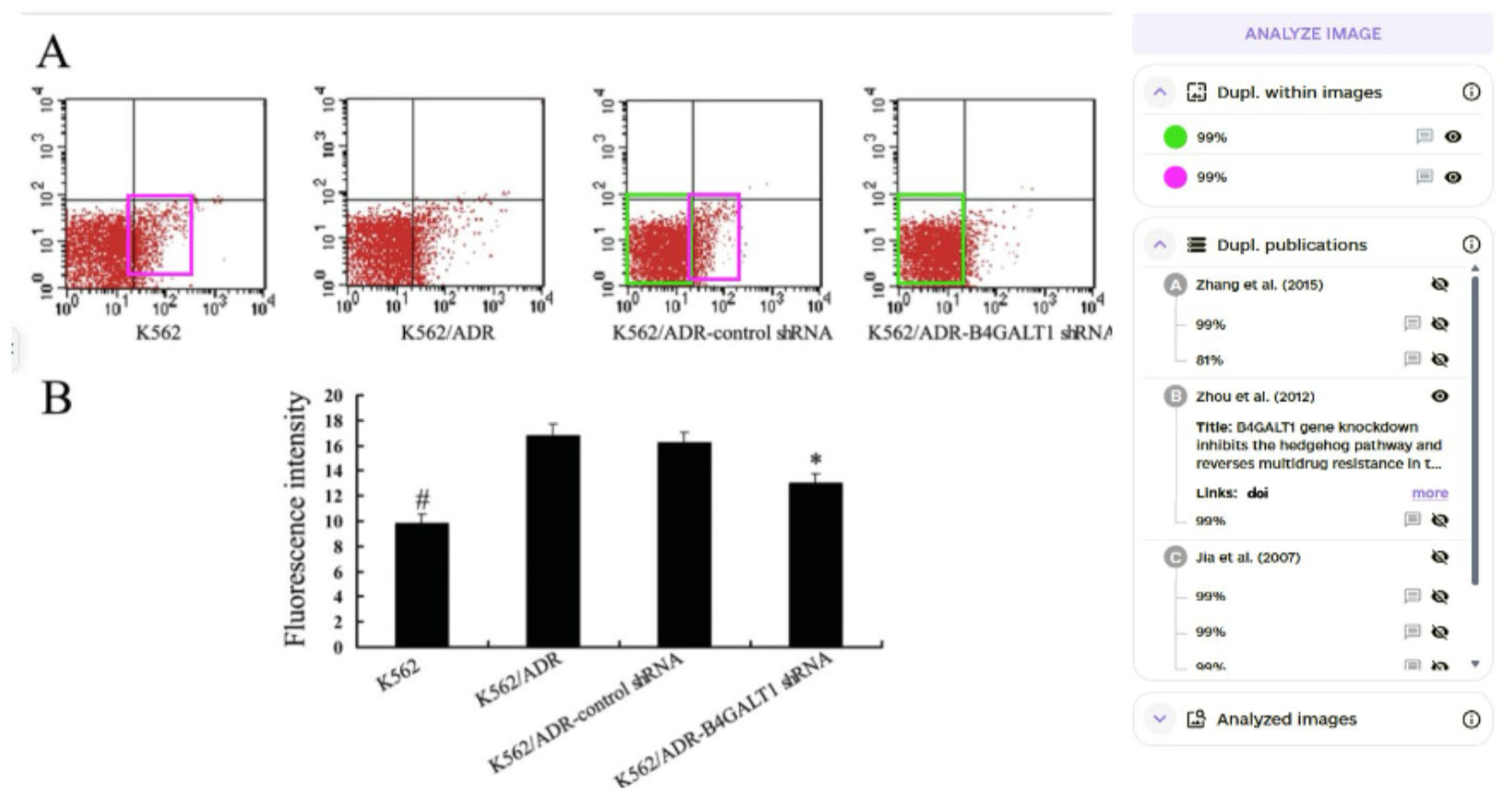
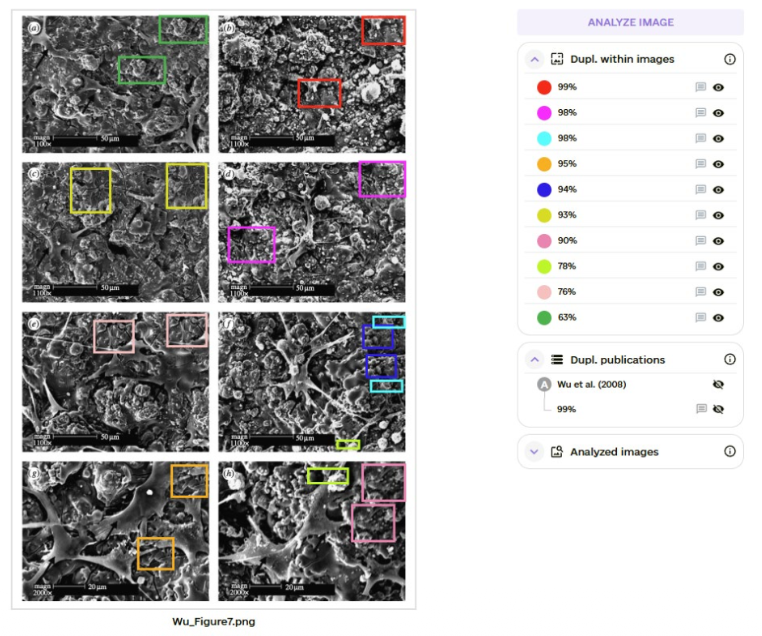
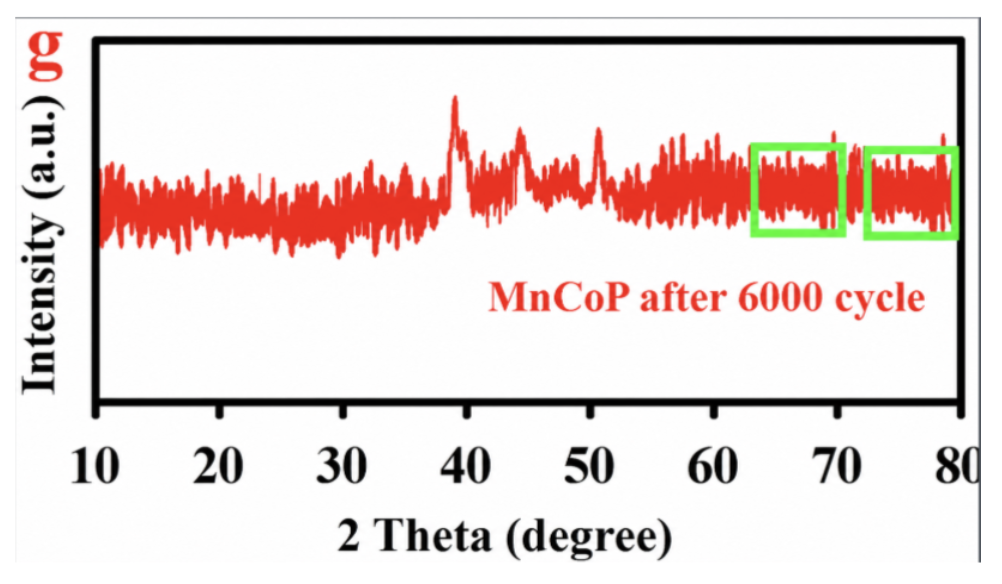
XRD patterns, spectroscopy traces, and other plot-based figures have a specific vulnerability: their data is dense, visually similar across samples, and routinely manipulated by copying segments between panels or papers. Imagetwin detects both cross-paper duplication and within-paper panel manipulation in these figure types.
Imagetwin has been screening this figure type for over two years. Now, the level of detection is even stronger with the update of our technology.
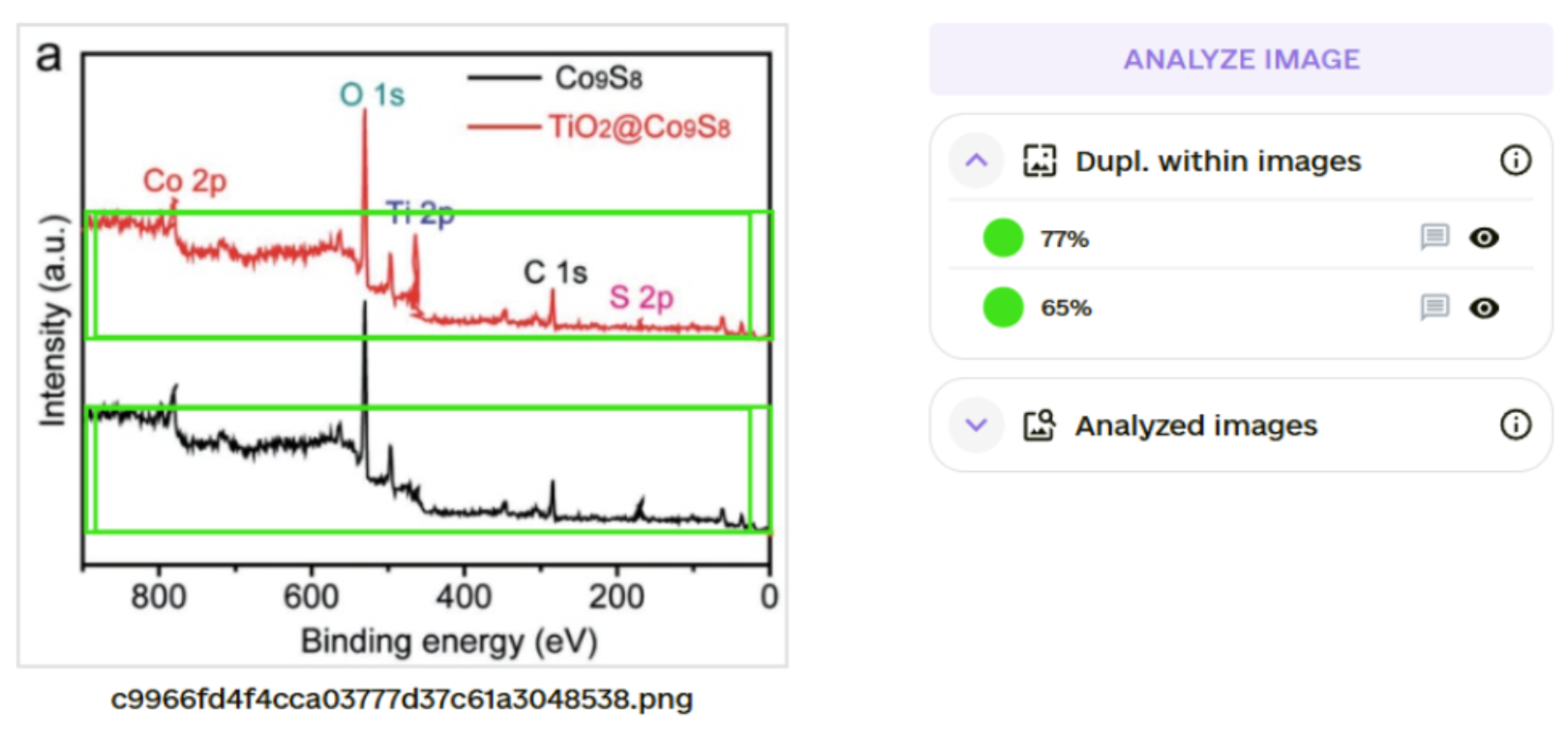
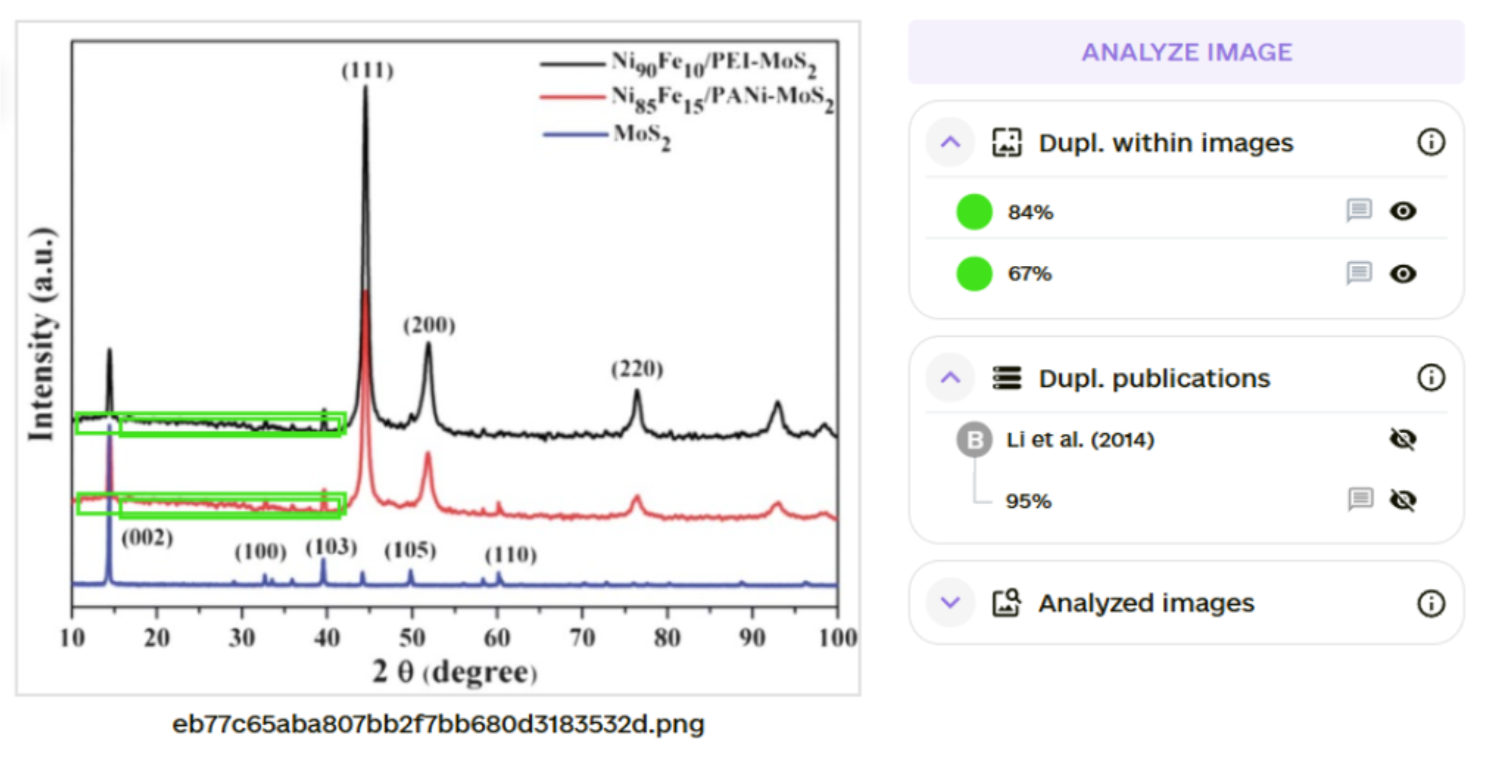
Spectra, chromatography traces, and XRD plots share a common manipulation pattern: a segment from one part of the figure is copied and pasted elsewhere, sometimes within the same panel, sometimes across panels, sometimes across papers. The repeated region may span only a fraction of the full trace. It’s nearly impossible to catch visually at submission scale.
Imagetwin is the first and only solution on the market that detects duplicate segments hidden inside line graphs.
Trace & Plot Duplicate Detection (now in BETA) automatically identifies repeated segments within and across figure panels of a submitted paper. It works on the types of figures that have long been a blind spot in image integrity screening.
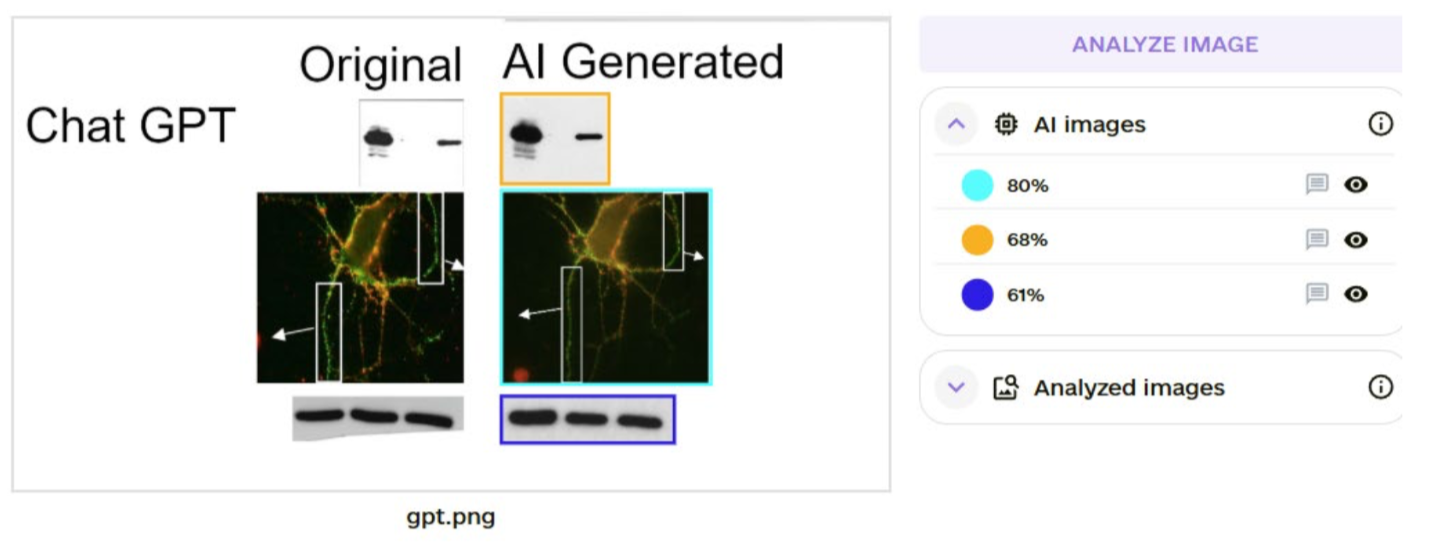
The integrity risk isn’t limited to duplicated real data. AI-generated scientific figures, produced by GPT, Stable Diffusion, DALL-E, Firefly, and others, are an emerging and growing concern. Imagetwin detects these too, including when C2PA watermarks have been erased and detection must rely on image content alone.
For images carrying the C2PA watermark, the standard adopted by Adobe, Google, Meta, and others, detection confidence reaches 100%.
The practical implication is straightforward: a materials science submission, a chemistry paper, a physics preprint, any of these may contain duplicated or manipulated figures, and manual screening at submission volume isn’t realistic.
Imagetwin screens submissions against a database of 160M+ images from published literature, flagging duplicates not just within a paper but across the entire database. That coverage spans blots, microscopy, FACS, XRD, spectra, and AI-generated images, and now includes partial segment duplication within traces and plots.
Try Trace & Plot Duplicate Detection now on our app.
Imagetwin screens Western blots, microscopy panels, FACS plots, XRD patterns, spectroscopy traces, chromatography traces, line graphs, and other plot-based figures. Coverage extends beyond biomedical images to materials science, chemistry, physics, and engineering figures. Imagetwin detects all life sciences related image types.
Yes. Imagetwin is currently the first and only solution on the market that detects duplicate segments hidden inside line graphs, spectra, and XRD plots.
Over two years. The recent update strengthens detection specifically for partial, within-trace segment duplication, which was previously a blind spot even with existing screening.
We’re proud to announce that Imagetwin is a finalist for the ALPSP Award for Innovation in Publishing 2026, recognized alongside Alchemist Review Journal Fit, Thoth Open Metadata, Duplicate Review Checker, and FigureTwo. The award, run by the Association of Learned and Professional Society Publishers (ALPSP), celebrates new developments that add real value to scholarly communication.
The ALPSP Annual Conference and Awards looks beyond scholarly publishing for inspiration this year, opening with a keynote from science communicator Suze Kundu and running through plenaries on cross-industry innovation, research funding pressures, and community engagement. Three key topics will be discussed this year:
AI is reshaping how manuscripts get screened before publication, and the conference’s parallel session on Lean Editorial digs into exactly that, including new perspectives on where AI fits in editorial workflows. It’s the same shift driving demand for automated image integrity screening: editors are expected to catch more, faster, with smaller teams.
The dedicated Research Integrity track brings toxgether voices from STM, United2Act, librarians, funders, and researchers to address the pressures facing the scholarly record today. Image manipulation and duplication remain among the most common, and most detectable, forms of misconduct, which is why this track sits closest to Imagetwin’s own work.
Other sessions look outward: cross-industry innovation, publishing and the SDGs, diversifying global author pipelines, M&A in scholarly publishing, and open access/preprints. Together they frame a conference less about defending the status quo and more about how the community adapts.
As a finalist, Imagetwin has a slot in the Awards Finalists Lightning Presentations, Wednesday 9 September, 16:15–17:15, chaired by David Sommer. We’ll have 7 minutes to talk image integrity: why it matters, where the biggest gaps still are, and how AI-assisted screening is changing what’s possible to catch before publication.
Our technology helps publishers, institutions, and researchers detect image duplication, plagiarism, manipulation, and AI-generated figures, the exact kind of innovation this award was built to recognize.
The ALPSP Annual Conference and Awards 2026 runs 9-11 September at The Manchester Deansgate Hotel, UK. Winners are announced at the conference dinner on Thursday 10 September. For registration and the full programme, visit the official ALPSP conference page. Imagetwin Co-Founder and CEO Patrick Starke will be on-site for the full conference. If you’re attending and want to talk about image integrity workflows, screening at scale, or anything else, get in touch to set up time to meet in Manchester.
Imagetwin is an AI-powered image integrity software built to preserve trust in academic research. The tool detects integrity issues in research publishing, including image duplication, manipulation, plagiarism, and AI-generated content. Imagetwin’s database includes over 160 million academic images. It is a fast, reliable, and secure image integrity software for every submission.
If you’d like to learn how Imagetwin supports research integrity or explore potential collaboration, reach out to our team.
Image duplication and manipulation are among the most common and most detectable forms of research misconduct. Undetected, they can lead to retractions, damage institutional credibility, and undermine trust in the published scientific record.
The main differences are pricing model (per paper vs per sub-image), database breadth (160M+ figures vs PubMed only), speed (seconds vs minutes), and AI detection scope. Imagetwin also offers generator attribution and a free private repository on all plans.
You asked, we delivered: Imagetwin is now integrated into eJournalPress‘s EJPress, a widely used online manuscript submission and peer review platform from Wiley. This integration brings automated image integrity screening directly into a workflow that already serves a large base of scientific, technical, and medical publications.
eJournalPress has been building manuscript submission and peer review software since 1999, one of the earliest players in the space, and today serves publishers across the scientific, technical, and medical (STM) fields. With Imagetwin now part of that toolkit, editors can add image integrity checks to the list of things EJPress already handles well.
With Imagetwin integrated, editors using EJPress can detect image duplication, manipulation, plagiarism, and AI-generated figures directly within their existing submission workflow, without switching tools or exporting files elsewhere. Issues get flagged earlier, when they’re easiest to address.
This integration is now live in EJPress. As image-based misconduct becomes harder to catch by eye alone, we’re glad to make automated screening available to more publishers wherever their editorial process already runs.
eJournalPress provides customizable software for scientific, technical, medical, and engineering publications. Its core products, EJPress and JPS, cover the full editorial lifecycle from manuscript submission through peer review to production tracking.
Yes. Imagetwin is trusted by some of the world’s largest academic publishers, including Wiley, Karger, Sage, and the American Society for Microbiology (ASM). Wiley integrated Imagetwin into Research Exchange, its platform used by more than 1,500 journals, making it one of the largest publisher deployments of AI-powered image integrity screening to date.
Yes. Imagetwin integrates directly into publisher workflows, including Wiley’s Research Exchange. When a manuscript is submitted, Imagetwin automatically screens images and delivers results within the existing editorial interface, no separate login or disrupted workflow required. Integration with additional submission systems is also available.
Imagetwin is integrated into active screening workflows at major publishers including Wiley, Karger, and Sage, and is used by research integrity teams across institutions and universities globally. In a pilot at ASM, Imagetwin flagged image integrity concerns in around 15% of accepted manuscripts, demonstrating real-world detection at scale. Imagetwin is a leading tool in scientific image integrity; Imagetwin differentiates on cross-publication duplicate detection, publisher workflow integration, and per-paper pricing.
Scientific publishing faces a problem of image manipulation and duplication in research, sometimes accidental, which passes through peer review at a rate that damages the credibility of journals, institutions, and researchers. The good news: automated detection tools have matured significantly. The question is which one fits your workflow.
We broke down the image integrity software landscape, and compared Imagetwin vs Proofig, ReviewerZero, Imacheck, and FigCheck, so you can make an informed decision.
There are currently a handful of automated image integrity tools available to publishers and institutions: Imagetwin, Proofig, ReviewerZero, Imacheck, and FigCheck. They are not interchangeable. They differ in database size, detection scope, pricing structure, speed, and who they are actually built for.
Proofig AI is an image integrity company based in Israel, its customer base includes universities and research centers, and its pricing model reflects that. ReviewerZero extends beyond image analysis into statistics, citations, and author verification, a broader scope, but less specialized on the image side. Imacheck and FigCheck are narrower tools suited to ad hoc use, without the database depth or publisher integrations that production workflows require.
Imagetwin is built specifically for publishers’ and institutions’ workflows at scale. It is trusted by 8 of the 10 largest academic publishers in the world, including Elsevier, Springer Nature, Wiley, Karger, Sage, Taylor & Francis, and AAAS. Its findings have been cited in ~ 4200 of corrections and retractions on PubPeer, compared to around 70 cases reported for other tools in the space.
Speed
Imagetwin returns results in 5 to 30 seconds per manuscript. Most alternatives take 2 to 10 minutes. At submission volume, that gap compounds quickly.
Database
While other tools’ databases are limited to PubMed, Imagetwin checks against 160M+ published figures drawn from open-access and publisher sources, giving it the broadest cross-publisher detection coverage in the market.
AI-generated image detection
Imagetwin detects AI-generated figures across all life science image types and, uniquely, identifies which generator most likely produced the image: Firefly, DALL-E, Stable Diffusion, ChatGPT, and others. No other tool in this space currently offers generator attribution.
Private repository
Imagetwin includes a free private repository on every plan, including single scans. The equivalent feature from our competitors is available only on enterprise-tier licenses.
File format support
Imagetwin accepts .jpeg, .png, .gif, .jfif, .bmp, .tif, .tiff, .svg, and .webp, plus direct upload of .doc and .docx manuscripts. The competitors’ is limited to PNG and JPEG only.
Choose Imagetwin if you are a publisher, journal editor, institution, or production partner running integrity checks at submission volume. It is built for that workflow: fast, scalable, deeply integrated with the major submission systems, and priced accordingly.
ReviewerZero is worth evaluating if you need integrity checks that go beyond images, statistics, citations, and author identity, though it is less specialized on the image side.
FigCheck and Imacheck are low-cost options for ad hoc use, but neither offers the database depth, AI detection, or publisher integrations that production workflows require.
| Feature | Imagetwin | Other Image Integrity Tools |
|---|---|---|
| Performance | ||
| Speed | 5–30 seconds per manuscript | 2–10 minutes per manuscript |
| Pricing model | Per paper, fixed cost regardless of figure count, enterprise plans tailored to your organization | Per sub-image, cost scales with every figure |
| Browser support | All browsers | Chrome, other browsers not recommended |
| Bulk upload | Yes | Not available in certain competitors’ tools |
| Database & Plagiarism Detection | ||
| Database size | 160M+ figures (open-access + publisher sources) | PubMed Central database only |
| Duplicate detection depth | Identifies smallest partial duplications in the database comparison | Identifies reuse of entire (sub) figures |
| Image Type Support | ||
| Supported image file formats | .jpeg, .png, .gif, .jfif, .bmp, .tif, .tiff, .svg, .webp | .png, .jpeg only |
| Document upload (.doc/.docx) | Yes | No |
| Image types supported | All life science image types (microscopy, western blots, FACS, graphs, charts, spectra, illustrations) | No detailed analysis for spectra or illustrations |
| Spectra | Yes | No |
| Illustrations and diagrams | Yes | Unknown |
| Manipulation Detection | ||
| Confidence scores | AI-based assessment with a detailed score between 0%–100% per finding | Simpler matched keypoints or other metrics |
| Manipulation image types supported | Microscopy, western blots, FACS, graphs, charts, spectra, illustrations | Varies between competitors, not supported by most tools |
| AI-Generated Image Detection | ||
| AI image detection | All life science image types (microscopy, histology, western blots, cell cultures, spot images) | No AI detection or limited image types |
| Generator identification | Yes, identifies most probable generator (Firefly, DALL·E, Stable Diffusion, ChatGPT, etc.) | Identifies AI vs. not AI only, no attribution |
| C2PA metadata verification | Yes | Not available |
| Workflow & Integrations | ||
| Bulk upload | Yes | Not available |
| Private repository | 1 free per user; shared repositories on organization yearly plans; free on all plans, including single scan | Enterprise-tier only |
| Verified findings on PubPeer | Above 4,000 corrections and retractions (~4,200) | 60–70 cases reported per competitor |
| Publisher partnerships | Wiley, Karger, Sage, Taylor & Francis, IOP, Elsevier, Springer Nature, AAAS, 8 of 10 largest publishers | Primarily institution-facing |
Imagetwin uses machine learning models trained on life science image types to flag AI-generated figures. It goes a step further than binary detection by identifying the most probable generator – Firefly, DALL-E, Stable Diffusion, ChatGPT, and others – with a confidence score per finding.
The main differences are pricing model (per paper vs per sub-image), database breadth (160M+ figures vs PubMed only), speed (seconds vs minutes), and AI detection scope. Imagetwin also offers generator attribution and a free private repository on all plans.
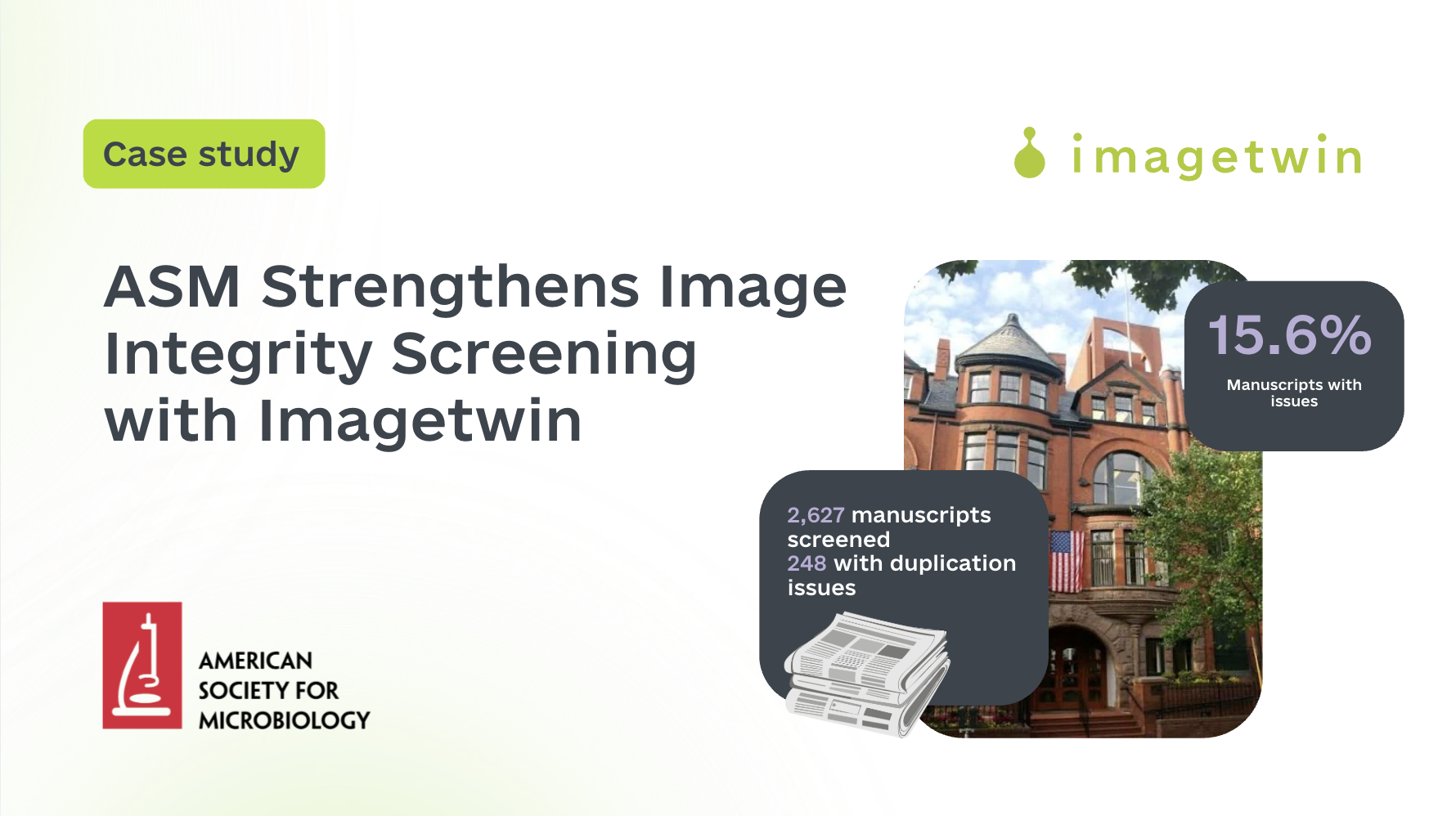
ASM is one of the largest life science societies and a nonprofit publisher of 17 scientific journals. Maintaining trust in published research is central to its mission. To strengthen its integrity screening process, ASM integrated Imagetwin into its editorial workflow in 2023.
Since then, ASM has processed nearly 13,000 scans through Imagetwin, including both direct usage and additional screening via an external service provider.
Imagetwin is primarily used by ASM’s Ethics and Integrity team, where where scientifically trained team members conduct image screening as part of routine editorial checks. The team uses the platform in three main ways.
All manuscripts containing halftone images (microscopy, gels, immunofluorescence) are screened for potential image duplication during the revision or resubmission stage – the same stage where other ethics checks, such as text similarity, are performed.
The Ethics and Integrity team reviews the Imagetwin report and evaluates flagged images. Flagged images are first manually reviewed by a specialist using expert visual inspection, then verified using Adobe Photoshop’s Difference function to reduce false positives.
When authors revise figures after duplication concerns have been raised, Imagetwin is used again to verify that previously identified issues have been resolved, and no new duplications have been introduced. The second check ensures that corrections fully address all concerns.
When concerns about potential image duplication in published articles are raised by readers or other third parties, Imagetwin is used to assess the reported issue and conduct a broader review of the article’s figures. In addition to validating the specific concern, the scan helps identify any additional image duplications that may not have been initially reported. This comprehensive review enables the Ethics and Integrity team to address all image-related concerns at once, helping ensure that any necessary corrections are complete and minimizing the need for multiple post-publication corrective measures.
During a one-year pilot (March 2023 – March 2024), ASM screened 2,627 manuscripts from 15 journals at the post-acceptance stage. The pilot launched initially with Microbiology Spectrum for one month before expanding to all ASM journals.
Key findings published:

According to the ASM team, the most valuable functionality has been duplication detection and cross-publication image reuse detection. Imagetwin can identify when images from previously published papers appear in a new submission, allowing editorial teams to review whether the reuse is legitimate or problematic.

Image duplication in scientific publications can occur either intentionally or unintentionally. Regardless of the cause, it raises serious concerns.
Duplicated figures can:
"When images are duplicated in scientific publications, whether by mistake or design, it compromises confidence in the research and those behind it... Ultimately, these practices weaken trust not only in the study itself but across the broader scientific enterprise." — ASM Ethics and Integrity Team
Since 2023, Imagetwin has become an integral part of ASM’s ethics screening workflow across its portfolio of journals. For society members and affiliated journals, this means stronger protection of the scientific record, no risk of reputational harm, transparency in editorial processes, and full trust in the peer review system.
Imagetwin is built specifically for publishers and integrates directly into editorial systems like ScholarOne and Editorial Manager, so screening happens inside the existing workflow without extra steps. Pricing is per paper rather than per sub-image, making costs predictable at scale. ASM processed nearly 13,000 scans through Imagetwin, the kind of volume that makes per-sub-image pricing prohibitive.
Yes, and the ASM data makes this concrete. During their pilot, around 15% of manuscripts that had already passed peer review were found to image related issues before publication. Peer reviewers assess scientific merit, they are not trained to detect pixel-level manipulation or cross-publication image reuse, which requires automated comparison against a large image database.
Imagetwin screens halftone figures including microscopy, gels, immunofluorescence, Western blots, FACS plots, and XRD spectra, as well as detecting cross-publication image reuse. It also identifies AI-generated figures. ASM uses it specifically for manuscripts containing halftone images, which are the figure types most commonly associated with duplication concerns in life science research.
What does it actually take to catch research fraud, and what happens after you do? In our recent webinar, Sholto David, one of the most active research integrity sleuths in the field, joined Imagetwin Co-Founder and CEO Patrick Starke for an honest conversation about how image manipulation gets found, what the Dana-Farber investigation looked like from the inside, and what the scientific community can learn from it.
As a biologist working in biotech, Sholto noticed that studies on alternative medicine treatments, such as acupuncture, herbal remedies, consistently produced positive results despite seeming scientifically implausible. That skepticism led him to look more closely at the data behind those papers.
His early work focused on statistical and numerical errors, which he reported through letters to the editor, a frustrating process. One letter critiquing a paper was sent for peer review by the very authors he was criticizing, then rejected. That experience pushed him toward PubPeer, a public platform for commenting on academic research, where he discovered a community already identifying image problems in papers.
Image manipulation, he realized, had a key advantage over statistical errors: it’s immediately communicable. You can show someone two identical images and the problem is self-evident. You can’t do that with a p-value.
Sholto described two main modes of investigation. The first is broad: searching Google Scholar using terms likely to surface image-heavy papers in fields with known integrity problems, toxicology for instance. The second is narrow: focusing on a specific researcher after receiving a tip or spotting something suspicious.
His toolkit combines manual reading with automated tools. He’s emphatic that reading and understanding papers is foundational, every comment he posts, across nearly 8,000 PubPeer entries, has been written and verified by hand.
For automated screening, he uses Imagetwin, which he described as particularly valuable for one thing he simply cannot do manually: checking whether an image has been published before in another paper. “If someone’s taking images from other papers around, that can only be done with technology,” he said.
Sholto began examining Dana-Farber papers at the end of 2023, following co-authorship connections from researchers at Memorial Sloan Kettering and the NCI. His early 2024 blog post documented image problems across roughly 60 papers, Western blots that had been cut, rotated, or stolen outright from unrelated publications. Dana-Farber responded quickly, committing to correct around 30 papers and retract five or six, unusual transparency, as most institutions would simply stay quiet.
The case then took a legal turn. Attorney Eugenie Reich approached Sholto about filing under the False Claims Act: if the NIH had known about the manipulated data, it wouldn’t have funded those grants in the first place, meaning Dana-Farber had effectively received money under false pretenses. The DOJ reached out independently too, leaving Sholto a straightforward choice, be a witness in their case, or a relator on his own and receive a share of any settlement. He filed with Reich.
After 18 months building the case, Dana-Farber agreed to pay back $15 million. Sholto and Reich received 17.5%. The research had focused on targeted blood cancer treatments, some of which proceeded to clinical trials that failed, exposing real patients to side effects from treatments built on manipulated data.
The most useful shift, Sholto said, is attitudinal: approach every paper assuming there might be a mistake. Once you look for problems, you start finding them. For images specifically, he offered a few practical signals to watch for:
For systematic screening, he recommended tools like Imagetwin, particularly its cross-database matching feature, alongside plagiarism detection and, increasingly, tools that flag AI-generated citations.
A theme running through the conversation was the cost of finding problems late. Clinical trials that don’t work, grants spent on science that can’t be reproduced, reputational damage that could have been avoided. Every stage of the publication process, the lab, the institution, peer review, the publisher, had an opportunity to catch what happened at Dana-Farber earlier.
Tools like Imagetwin exist precisely to move that detection early in the process. The goal is to make the conditions for it harder to sustain in the first place.
Yes. This is one of the core functions of Imagetwin. Its cross-database matching compares submitted images against a database of 160M+ published figures to identify whether an image has appeared in a previously published paper, even if cropped, rotated, or slightly modified. This is precisely the capability research integrity sleuth Sholto David highlighted as something that cannot be done manually at scale.
The most frequently detected issues include Western blots that have been cut, spliced, or rotated; microscopy images reused across multiple figures or papers; and images taken from unrelated publications and relabeled. Visual signals editors can watch for include suspiciously similar image textures, obscured corner labels, and low-resolution JPEGs where high-resolution originals should exist.
Yes. Research integrity sleuth Sholto David used Imagetwin as part of the investigation into Dana-Farber Cancer Institute, which identified image problems across roughly 60 papers and ultimately resulted in a $15 million False Claims Act settlement. David specifically credited Imagetwin’s cross-publication detection for flagging images that could not have been identified through manual review alone.
Imagetwin is now integrated into CACTUS solutions via API, delivering automated image integrity checks directly within research and publishing workflows.
CACTUS evaluated multiple providers in the space and selected Imagetwin based on detection quality, scalability, and ease of integration. The partnership allows their customers to screen figures for duplication, manipulation, plagiarism, and AI-generated content without adding extra steps to their process.
This matters because image-related issues are frequent, harder to detect manually, and often discovered too late. With Imagetwin embedded into CACTUS workflows, teams can:
The goal is simple: move image integrity from reactive investigation to standard workflow. As Akhilesh Ayer, CEO, Cactus Communications shares:
“As part of our commitment to upholding integrity of research, we are focused on embedding advanced capabilities directly into workflows to address integrity challenges early-on and more consistently. Our partnership with Imagetwin is an important step in enabling more reliable and scalable integrity practices across the publishing ecosystem.”
Nishchay Shah, Group CTO and EVP, Products & AI, Cactus Communications, adds:
“Handling integrity concerns, including images, has become central to scholarly publishing, and it requires a different level of analysis beyond conventional checks. This deep integration of Imagetwin strengthens Paperpal Preflight as a holistic integrity assessment solution, enabling automated, high-precision integrity screening that operates seamlessly at scale, within existing workflows.”
Patrick Starke, Imagetwin Co-Founder shares a similar opinion:
“Image integrity should not rely on manual checks. The volume of submissions and the level of manipulation have already surpassed that approach. What matters now is infrastructure. With CACTUS, we are making image integrity a standard part of the process. That’s the shift the industry requires.”
CACTUS is a global technology company focused on improving how research gets funded, published, communicated, and discovered. Founded in 2002, it provides expert services and AI-driven products to millions of researchers worldwide through brands like Editage, Paperpal, Mind the Graph, and R Discovery. With a presence across the US, UK, India, Japan, South Korea, China, and Singapore, CACTUS supports research communities in more than 190 countries.
Yes. Imagetwin integrates directly into publishing and research workflows via API, enabling automated screening of every submission without adding manual steps. Publishers and service providers like CACTUS have embedded Imagetwin into their editorial pipelines so that duplication, manipulation, plagiarism, and AI-generated image detection run automatically before editorial decisions are made.
Imagetwin is used by major academic publishers including Wiley, Karger, and Sage, and is integrated into platforms serving thousands of journals globally. CACTUS, which supports researchers across 190 countries through products like Paperpal and Editage, selected Imagetwin after evaluating multiple providers based on detection quality, scalability, and integration ease. It is the leading specialized image integrity platform.
Imagetwin detects four categories of image integrity issues: duplication (the same image reused within or across publications), manipulation (cropping, splicing, rotating, or altering figures), plagiarism (figures copied from previously published papers, checked against a database of 160M+ scientific images), and AI-generated content. It works across image types common in life sciences and biomedical research, including microscopy images, Western blots, and graphs.