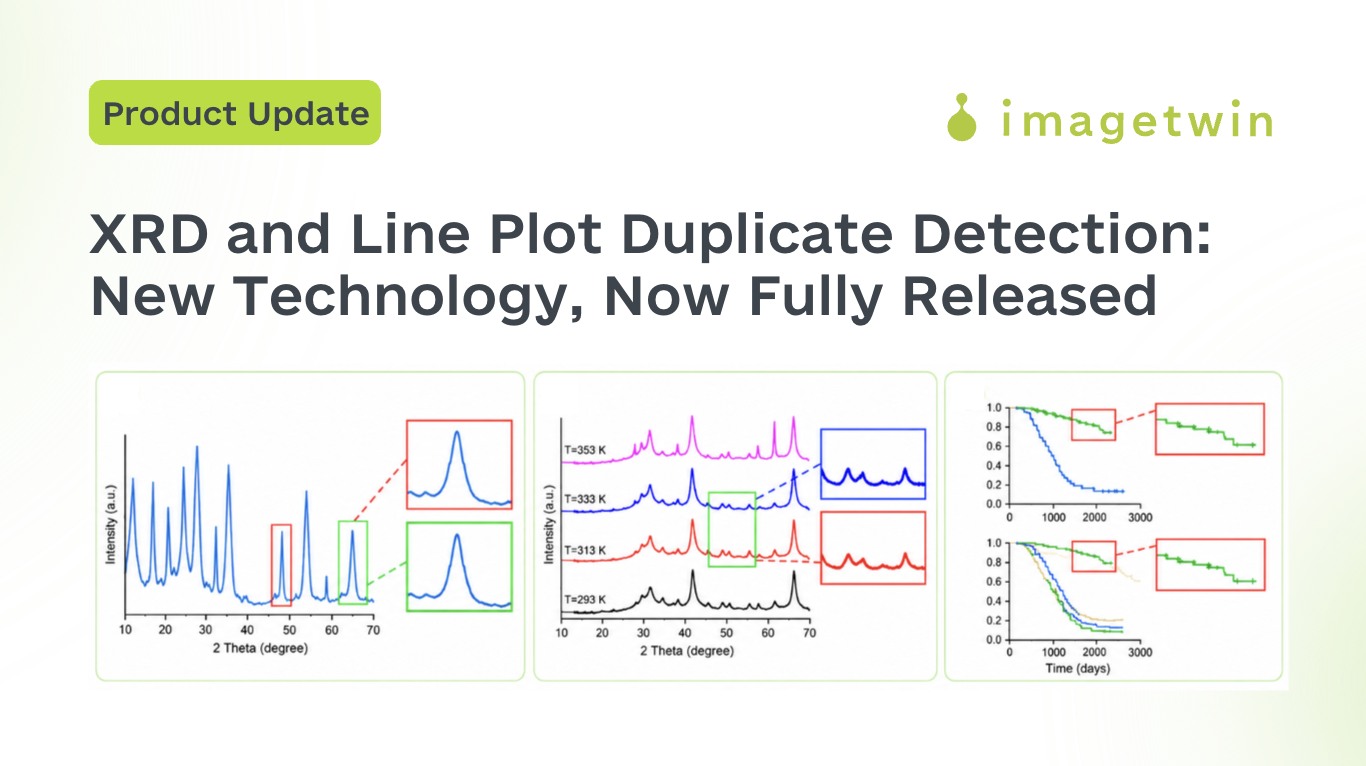
XRD and Line Plot Duplicate Detection: New Technology, Now Fully Released

By  Sofiia |
XRD and Line Plot Duplicate Detection: New Technology, Now Fully Released

What's new

We recently introduced our new detection technology for western blots and FACS images. We have now applied the same approach to XRD and line plots, and again saw significant improvements in detection rates. This is one of the most difficult challenges in image duplication detection we’ve worked on so far.

XRD image duplicate detection has been in beta until now. With this update, it is fully released.

What is special about XRD and Line Plot detection

This is one of the most difficult detection challenges we’ve worked on so far. Two line plots can look very similar by design, so the hard part is telling natural similarity from inappropriate duplication. Some repetition isn’t an integrity concern at all, such as naturally repeating curves like sine waves. We invested a lot of research and development into this problem, and we are very happy with the results.

What this looks like in practice

The examples below are real duplications flagged on PubPeer. Imagetwin detects duplications both within a single plot and between plots in the same paper.

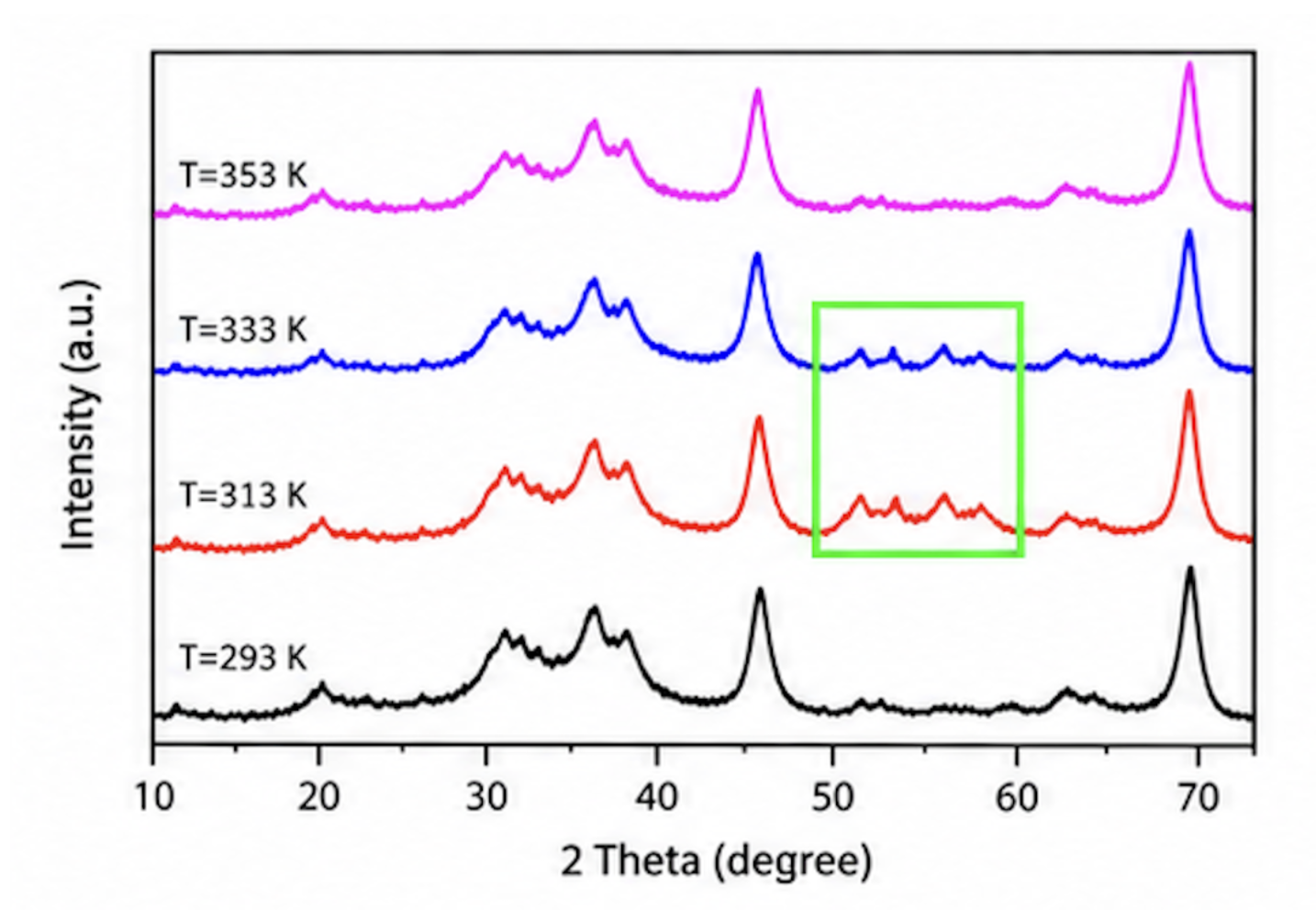
Example 1 (within one plot): XRD patterns reported at 333 K and 313 K show the same curve, only shifted vertically.
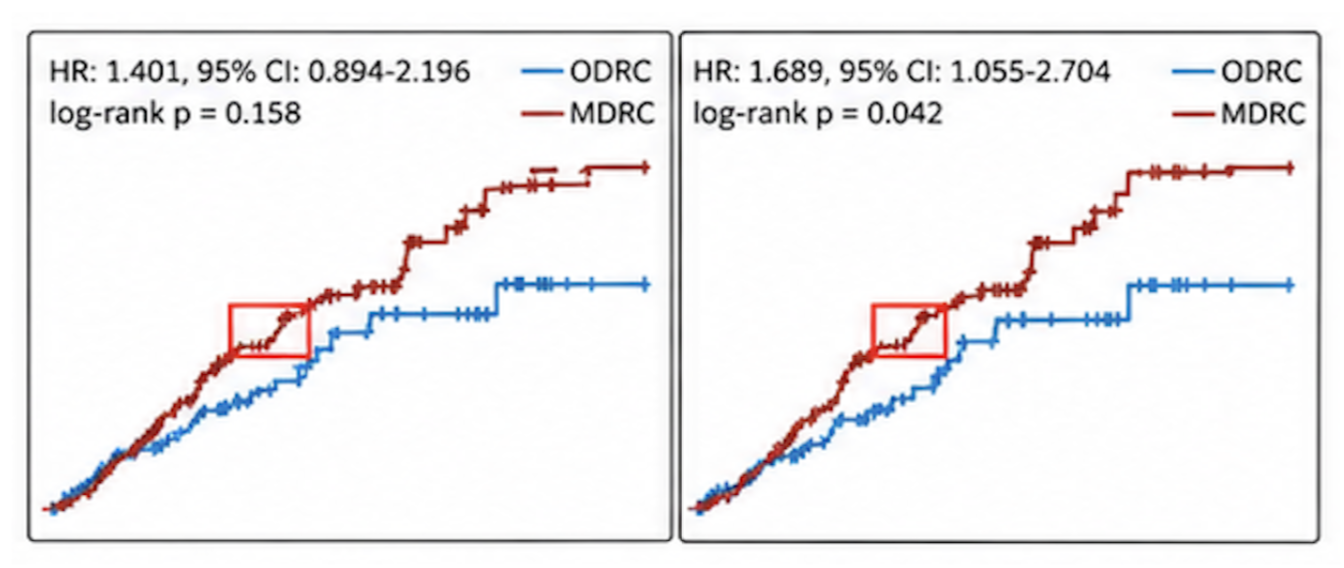
Example 2 (between plots): The same survival curve segment appears in two plots, reported with different statistics (p = 0.158 vs p = 0.042).
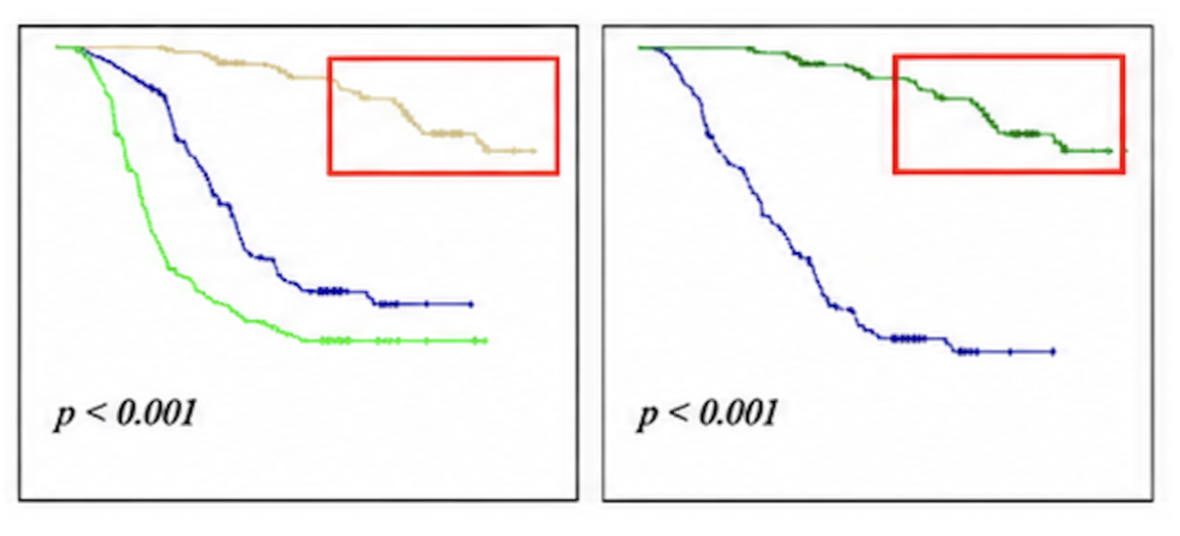
Example 3 (between plots): A survival curve from one plot reappears in a second plot in a different colour.

How we evaluated it

To measure performance on real cases, we built a test set of genuine XRD duplications reported on PubPeer and mixed them with distractor images.

  • Real duplications (459 cases) are used to measure the detection rate (true positive rate): how many actual duplications the method finds.
  • Distractor images (7,910 images) are used to measure the false alarm rate (false positive rate): how often the method flags something that is not a duplication.

We made the distractor set deliberately difficult. Using hard mining, we selected images that already look very similar to each other. A random pool of images would contain too few edge cases, and the false alarm rate would look better than it really is.

The test set was never used during training, so the results reflect performance on images the model had not seen before.

What's next

XRD and line plot duplications within individual papers are already covered by our image plagiarism checker, both within and between subimages. By the end of the year, we aim to detect them across different papers too. Over the next few weeks, we will also roll out the new duplicate detection technology for microscopy and light photography images.

The new XRD and line plot detection is already live for all Imagetwin users; your next check will use it automatically.

Frequently asked questions

We tested it on 459 real duplications from PubPeer and 7,910 hard-mined distractor images. Our image analysis AI found 81.7% of duplications with a false alarm rate of 0.62%. The test set was never used during training, and the new detection is live for all users of the Imagetwin image analysis tool.

For XRD and line plots, Imagetwin currently detects duplications within individual papers, both within and between subimages. By the end of the year, we aim to detect them across different papers too. That works like an image plagiarism checker, comparing figures against other publications the way a plagiarism checker compares text.

Line plots often look alike by design. Related samples share peaks, and similar cohorts produce similar curves. Some repetition is natural, such as repeating curves like sine waves. A good image analysis tool has to tell natural similarity apart from artificial duplication.

Protect Research Integrity with Confidence

Start using Imagetwin to detect image integrity issues and support trustworthy research publishing.

Frequently asked questions

Imagetwin is software designed to detect integrity issues in figures of scientific articles. It helps identify inappropriate manipulations and duplications in various figure types, including western blots, microscopy images, and light photography.

Imagetwin is beneficial for researchers, peer reviewers, journal editors, and institutions aiming to uphold the quality and trustworthiness of scientific publications by ensuring the integrity of visual data.

Users can upload a PDF or multiple image files to Imagetwin. The software then scans the content using algorithms and vast databases of published scientific figures to detect potential integrity issues. Within seconds, results are presented through a web interface, highlighting any detected problems for review.

Yes, we prioritize data privacy and security, ensuring that all image indexing and exchanges are protected with industry-standard encryption and security best practices.

Create an account and start using Imagetwin immediately. We prepared a few example documents that you can scan free of charge.

Yes, Imagetwin is a powerful addition to the peer-review process. It automatically detects various integrity issues, which can then be quickly verified by a reviewer, enhancing the efficiency and accuracy of the review process. Imagetwin also partners with industry leaders in publishing and scholarly workflows, such as Morressier, TNQ Technologies and more, transforming how research is submitted, reviewed and published.

For more detailed guidance on using Imagetwin, contact our support team through our Contact Us page.