WCRI 2026: The World Conference on Research Integrity in Vancouver

About WCRI

The World Conference on Research Integrity (WCRI) is one of the leading global forums for advancing responsible research. It unites scientists, publishers, institutions, and policymakers who work to strengthen trust, ethics, and accountability in science. WCRI Conference 2026 will focus on three major themes: Artificial Intelligence, Research Security, and Indigenous Knowledge Systems.

WCRI 2026 Themes

Each edition of the World Conference on Research Integrity focuses on key issues that shape how science evolves. The 2026 conference highlights the following:

Artificial Intelligence and Integrity in Scientific Research

AI now plays a central role in how research is created, verified, and shared. It can expose image or data manipulation that might otherwise go unnoticed, exactly what drives Imagetwin’s mission. At the same time, AI also introduces new risks: fabricated results, biased outputs, and unethical use of generative tools. The conference will explore both sides of this shift – how to use AI responsibly while keeping human judgment and transparency at the heart of science.

Research Security and Openness

Modern research depends on collaboration, but it also faces growing security challenges. Governments and institutions must protect sensitive data, intellectual property, and national interests without limiting the open exchange that fuels discovery. WCRI 2026 will focus on this balance: how to keep science transparent and trustworthy while addressing issues such as restricted partnerships, data access, and foreign influence.

Indigenous Knowledge and Ethical Research

This theme highlights the importance of Indigenous perspectives in global research ethics. It calls for genuine engagement with Indigenous ways of knowing and for a deeper respect for community-based research practices. By bringing these voices into the conversation, WCRI 2026 broadens what integrity means: compliance with global standards, cultural awareness, respect, and shared responsibility in how knowledge is created.

Imagetwin at WCRI 2026

Imagetwin will exhibit at the 9th World Conference on Research Integrity in Vancouver, Canada. WCRI’s mission aligns closely with ours: to promote transparency, accountability, and trust in scientific research.

Our AI-driven technology helps researchers, publishers, and institutions detect image duplication, plagiarism, manipulation, and AI-image fabrication before publication. We help protect research credibility and uphold the ethical standards that WCRI stands for by making image verification fast and reliable

We look forward to joining this global conversation on responsible and ethical research, since it will give our team a chance to connect with integrity leaders, exchange insights, and explore how technology can preserve trust in science. 

Visit us at our booth at WCRI 2026 to discuss potential collaborations to support research integrity worldwide.

WCRI Sign Up & Schedule

The 9th World Conference on Research Integrity (WCRI 2026) will take place from May 3–6, 2026, at The Westin Bayshore Hotel in Vancouver, British Columbia, Canada. It is open to researchers, institutions, and policymakers worldwide. 

For more information, visit the official WCRI Canada website for updates on registration, travel, and the full schedule.

About Imagetwin

Imagetwin uses artificial intelligence to verify the integrity of scientific images. Our platform helps publishers, universities, institutions, researchers detect image integrity issues, prevent fraud, and protect scientific credibility at scale. With a mission to make research more transparent and trustworthy, Imagetwin partners with the global scientific community to ensure that published findings reflect genuine, reproducible work. 

If you’d like to learn how Imagetwin supports research integrity or explore potential collaboration, reach out to our team.

Next Level Western Blot Duplicate Detection

Western Blots are among the most difficult scientific images to analyse for duplication. They often lack distinctive texture or structure, and many look strikingly similar to one another, which can result in a high false positive rate. Our current detection system performs well, but feedback from researchers and editors showed us that some especially challenging cases were slipping through.

Over the past months, our team has been building a stronger system designed specifically to handle these edge cases, and the results are a major step forward.

How We Improved Western Blot Detection

To improve detection, we analysed thousands of Western Blot duplicates identified on PubPeer. These real-world cases helped us understand recurring patterns and highlighted situations where conventional algorithms struggled.

From this foundation, we worked closely with research integrity experts to assemble a large, curated dataset of Western Blot duplicates. This became the basis for training a new machine learning model, purpose-built for this image type.

Key advances in the new system include:

  • Specialised training corpus
    Thousands of confirmed duplicates curated with expert input
  • Next-generation detection model
    Optimised to capture subtle similarities that generic approaches miss
  • Robustness to transformations
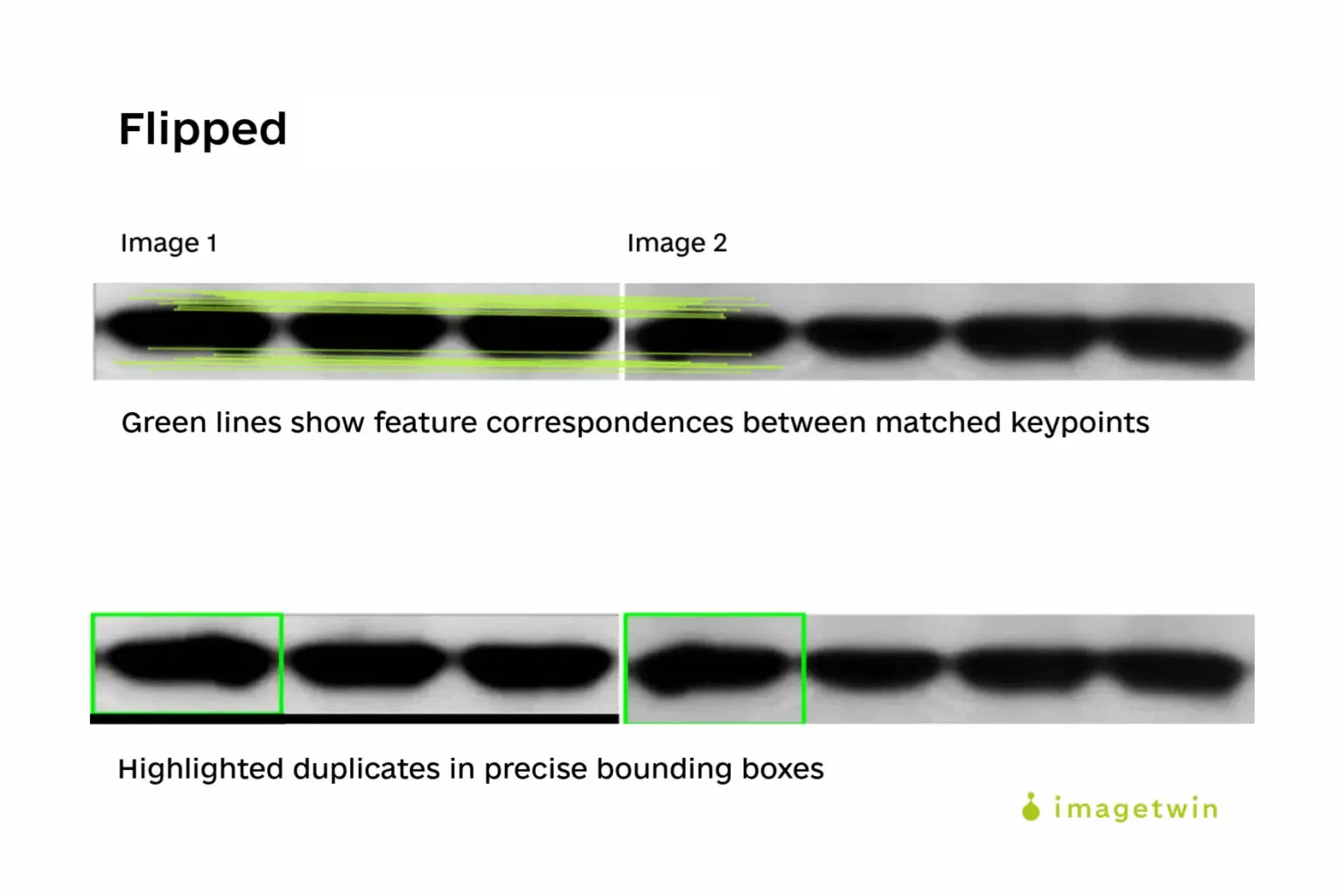
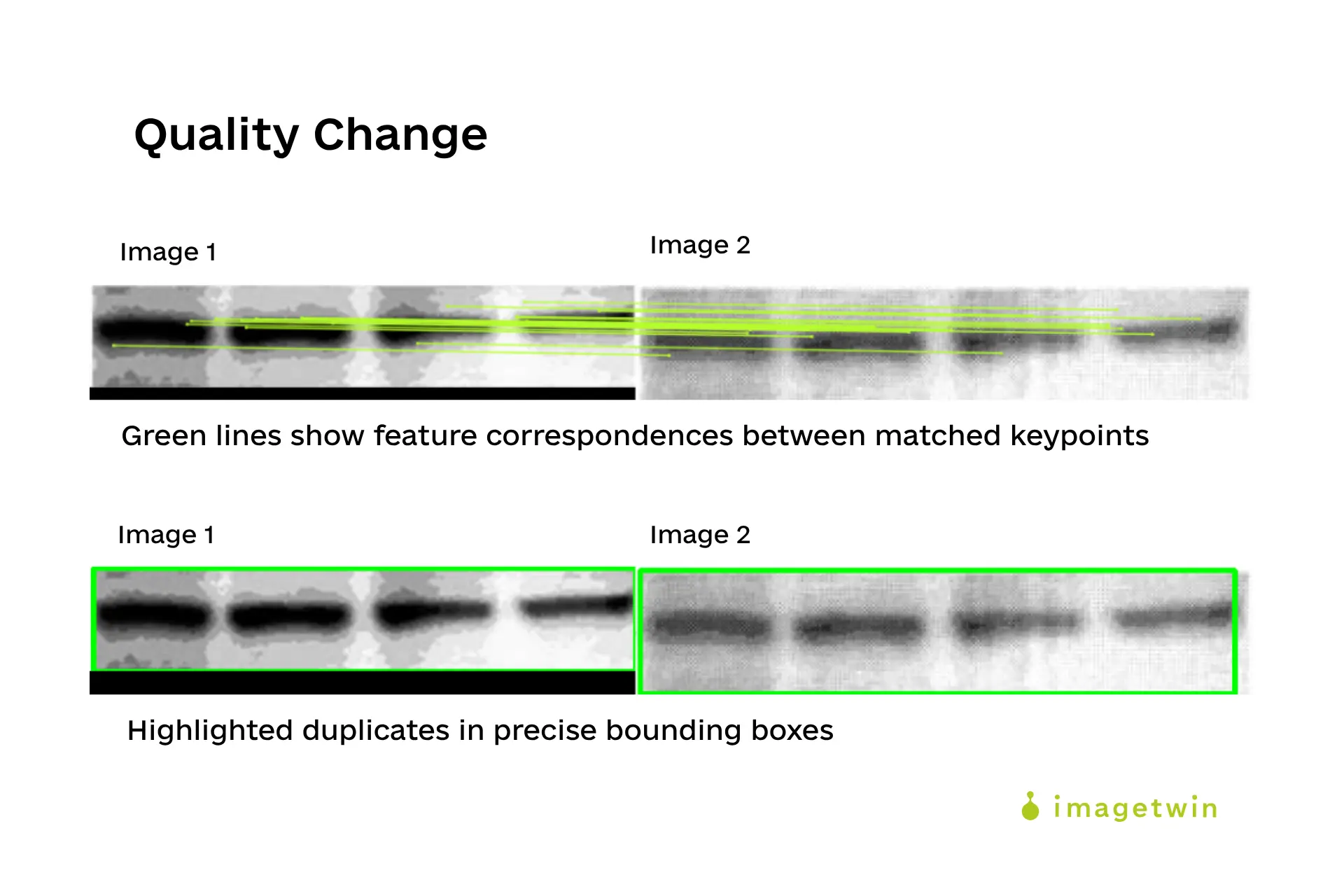
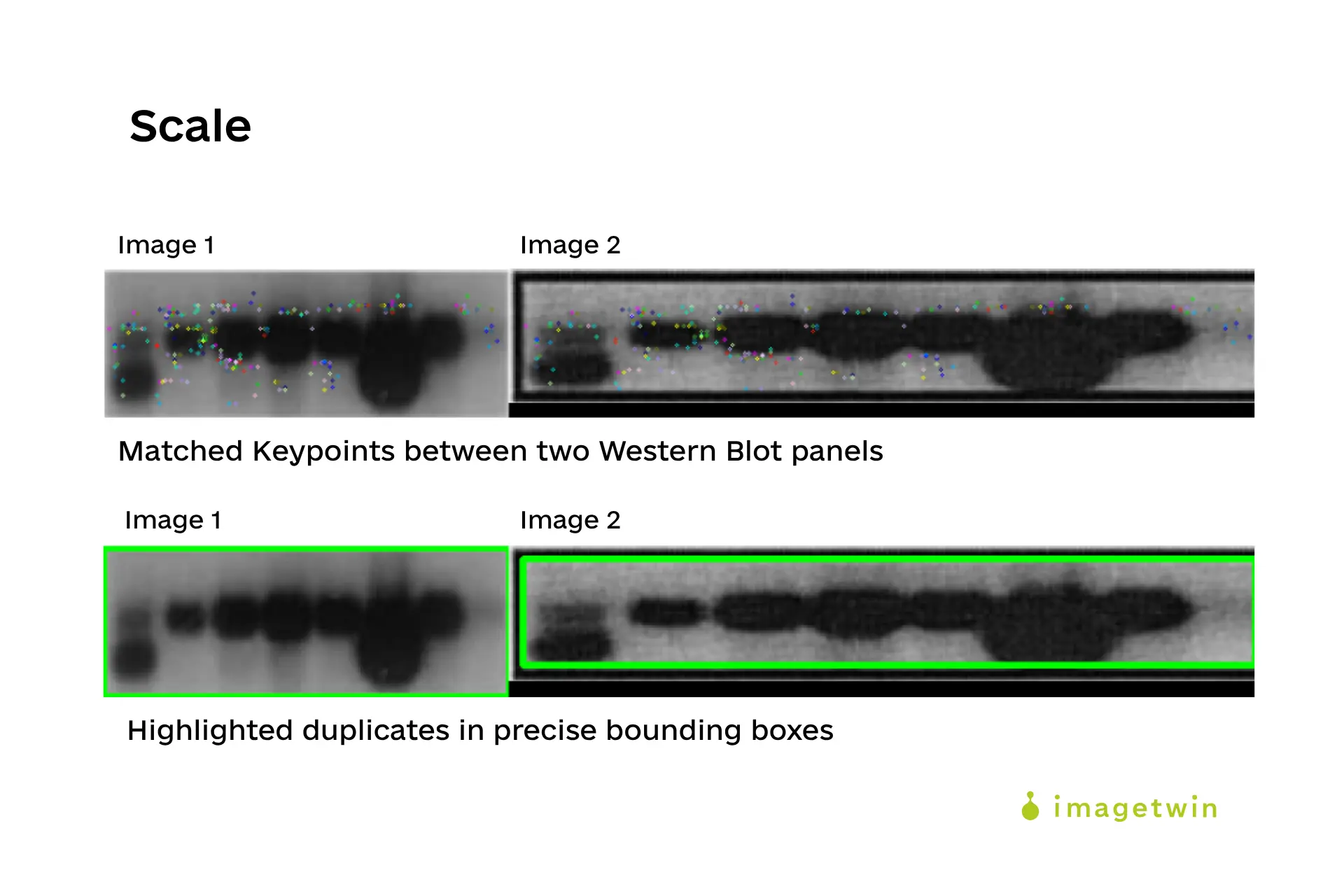
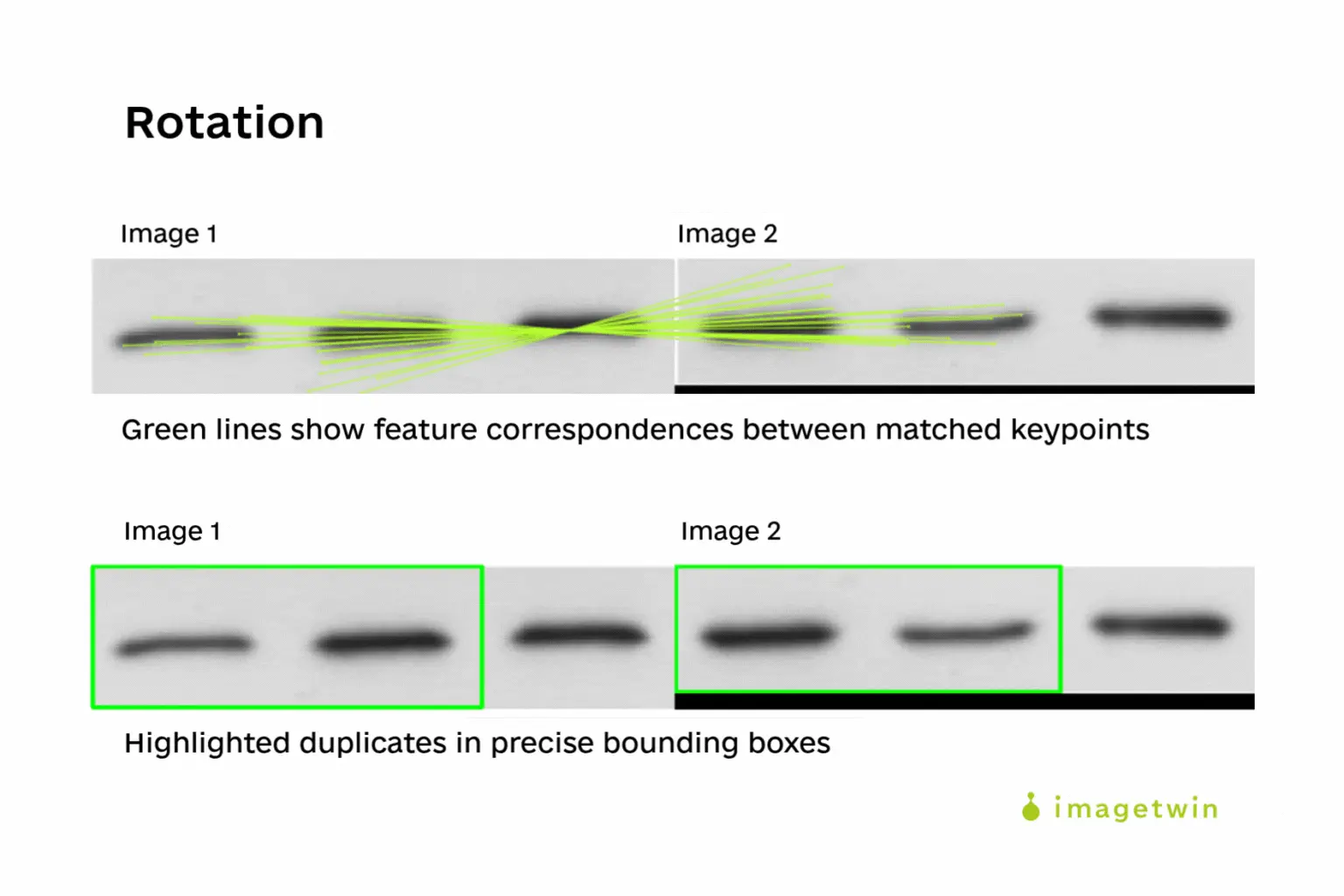
    Tested against common transformations such as rotation, scaling, contrast or colour shifts, quality loss, and flipping. These are all areas where the new model shows far stronger performance

What This Means for Users

With this release, duplicate detection between Western blot images has become substantially more accurate, achieving 90% accuracy on 443 verified duplicates collected from PubPeer. Many of the most challenging cases that previously went undetected are now flagged correctly. This reduces the risk of false negatives while giving researchers, editors, and institutions greater confidence in their results.

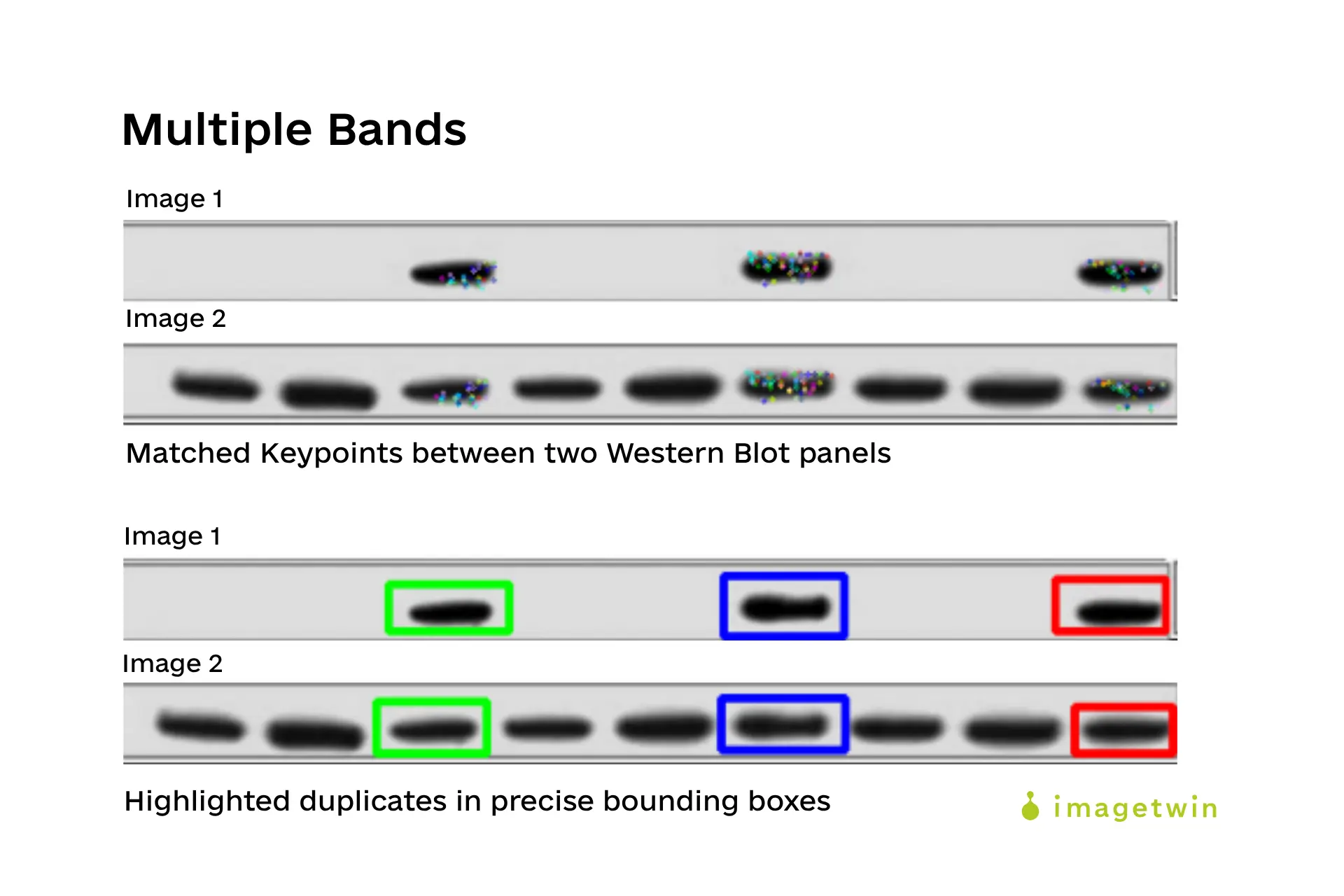
To demonstrate the impact of this upgrade, we tested the new model against some of the most difficult Western Blot cases shared by researchers and editors, some examples below: 

This means researchers, editors, and institutions can work with greater confidence that duplications will be caught, even in the toughest cases.

Looking Ahead

What we developed is not just a model for Western Blots. We have created a new duplicate detection technology that can be adapted to other use cases. Next, we will extend from duplicate detection between Western Blot images to duplicate detection within single Western Blot subimages. Then, over the coming months, we will roll out the new technology to flow cytometry images, microscopy images, and graphs, strengthening duplicate detection across an even broader range of figures.

By listening to feedback and analyzing real-world cases, we are building ever-stronger tools to support the research community. Western Blot detection is just the latest step in this process, and more improvements are already on the way.

Imagetwin Expands Reach with Image Integrity Checks in Signals Platform

We’re pleased to share that Imagetwin’s image analysis technology is now powering integrity checks within Signals Manuscript Checks, a leading platform used by publishers to evaluate submissions at scale. The integration enables publishers to automatically detect image duplication, plagiarism, manipulation, and AI-generated figures directly within their existing editorial workflows.

The volume and complexity of manuscript submissions continue to rise, bringing with them an increased risk of integrity issues that threaten publisher reputation. While editorial teams have long relied on fragmented tools to cover different aspects of review, this can slow down workflows and leave gaps in screening.

Our collaboration with Signals addresses that challenge by bringing image-based analysis into one consolidated system. Publishers can now:

  • Combine Imagetwin’s image integrity analysis with Signals’ author, reference, and full-text checks in a single platform

  • Flag issues such as duplication, plagiarism, manipulation, or AI generation, automatically, and early in the review process

  • Access image checks seamlessly through ScholarOne, Editorial Manager, or Direct Upload

Publishers are already seeing the benefits of a unified approach. Chad McCormick, Director of Research Integrity at FASEB, shared:

Available Now

Image integrity checks powered by Imagetwin are now available to publishers using Signals Manuscript Checks, including those integrated with ScholarOne and Editorial Manager.

This collaboration reflects a broader shift in scholarly publishing: image integrity is no longer a nice-to-have. It’s essential for protecting research quality and preserving trust in scientific communication.

About Signals

Signals is a comprehensive manuscript analysis platform designed to help publishers detect issues and evaluate submissions with greater accuracy and efficiency. By uniting author, reference, and content checks in one solution, Signals streamlines editorial workflows, reduces manual effort, and enhances decision-making across the publication process.

Imagetwin Powers Image Integrity Checks in Integra’s EditorialPilot

We’re excited to announce that Imagetwin has been integrated into Integra’s EditorialPilot, an all-in-one AI-powered manuscript screening platform. This partnership makes it easier than ever for publishers to check image integrity at scale, alongside the 40+ other automated checks EditorialPilot already offers.

EditorialPilot was created to tackle one of the biggest challenges in publishing today: the sheer volume of manuscripts. With every submission requiring checks for language, formatting, references, research integrity, and more, manual review is no longer enough. EditorialPilot addresses this with over 40 automated checks, covering everything from technical compliance to author identity. Now, with Imagetwin integrated, the platform goes a step further by offering advanced image integrity screening.

Our technology enables editors using EditorialPilot to detect image duplication, manipulation, plagiarism, and AI-generated figures against a database of over 100 million figures, directly within their workflow. With the ability to scan up to 10 manuscripts at a time, editors can save valuable time by ensuring that image-based integrity issues are caught at the earliest stage.

This integration is now live in EditorialPilot, meaning editors can benefit from Imagetwin’s checks today. We believe this partnership highlights the growing recognition that image integrity is a critical component of research integrity. And, that scalable and innovative tools are essential for maintaining quality and trustworthiness in research.

About Integra

Integra is a global leader in content services and publishing technology, helping editorial teams streamline their workflows and safeguard research integrity. 

Its flagship platform, EditorialPilot, is an AI-powered manuscript screening solution built for scale. By reducing manual effort, it lightens the editorial load, cuts turnaround times by up to 50%, and ensures only compliant, high-quality manuscripts move forward. This gives editors more time to focus on sound judgment and maintaining their journal’s reputation.

Imagetwin and Clear Skies Announce Partnership to Strengthen Research Integrity

Imagetwin and Clear Skies are proud to announce a new partnership that brings Imagetwin’s advanced figure analysis technology into Oversight, Clear Skies’ award-winning research integrity platform.

With this integration, users of Oversight will be able to access Imagetwin’s image analysis directly within their workflow. This marks a decisive step forward in ensuring research standards and providing institutions, publishers, and integrity officers with the tools they need to detect and prevent misconduct.

About Oversight

Clear Skies developed Oversight as the world’s first index of research integrity, providing metrics that describe research standards across the entire ecosystem, from individual papers to publishers, journals and institutions. Oversight’s unique approach focuses on ensuring that “bad science isn’t published”, enabling researchers and organizations to have confidence in the credibility of the scientific record.

Through AI models trained on peer-review, Oversight delivers an early warning system for problematic articles while maintaining strict confidentiality of data. The platform is continually expanding with new features and metrics to help the community uphold the highest standards in research.

The Partnership

By integrating Imagetwin into Oversight, the two organisations combine complementary strengths: Oversight’s large-scale integrity metrics and early detection, with Imagetwin’s precise figure-level analysis. Together, the collaboration delivers a more robust solution for tackling one of the most pressing issues in science today: ensuring research integrity at scale.

This partnership reflects a shared mission – creating the right environment for science by supporting standards, transparency, and trust.