Category: Insights


Scientific image manipulation slips through peer review more often than publishers would like to admit. Automated detection tools can help, but they're not all built the same way. We compared Imagetwin, Proofig, ReviewerZero, Imacheck, and FigCheck on the factors that actually matter at scale: speed, database coverage, pricing structure, and AI detection capabilities.
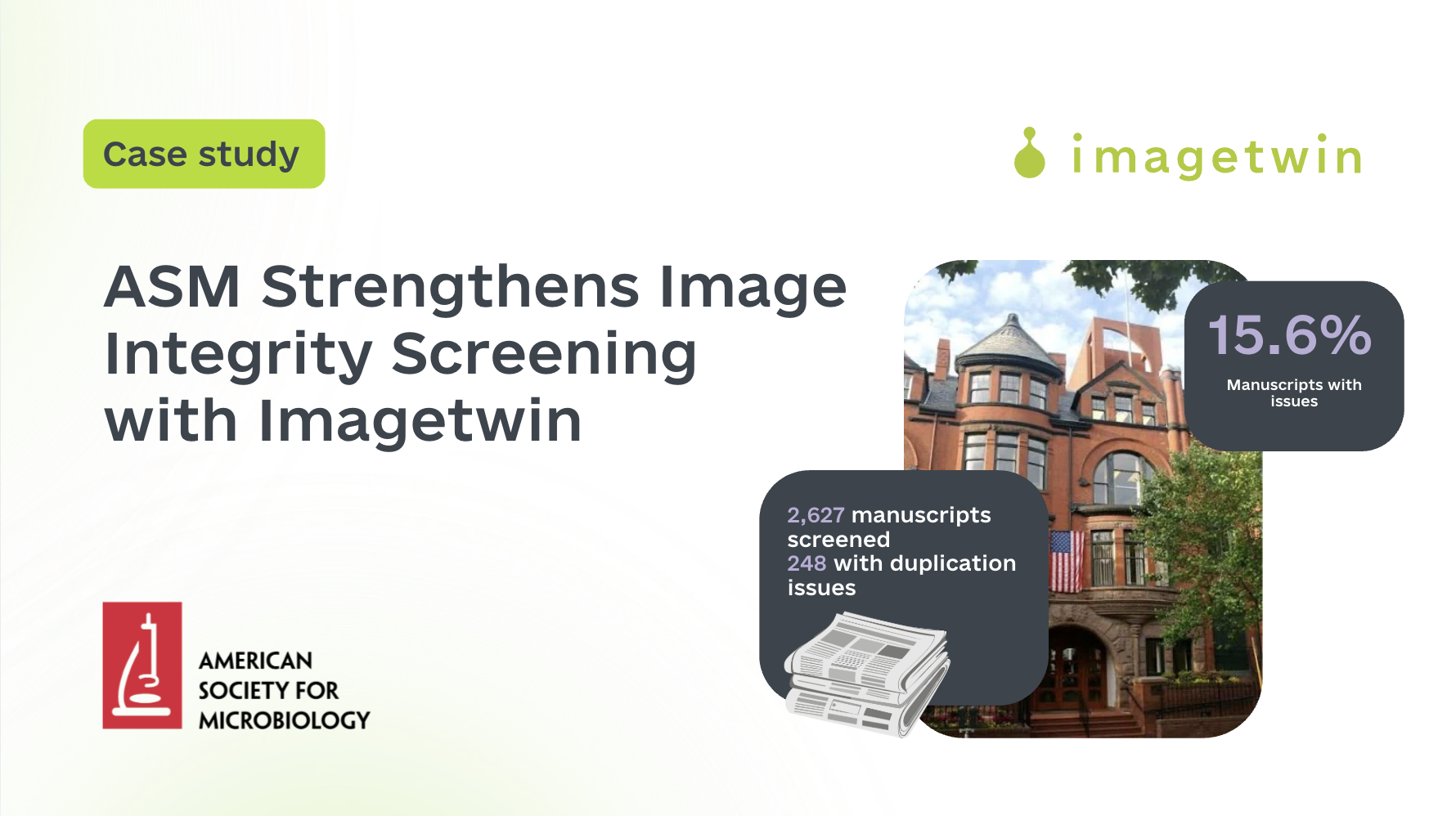
How ASM Uses Imagetwin ASM is one of the largest life science societies and a nonprofit publisher of 17 scientific journals. Maintaining trust in published research is central to its mission. To strengthen its integrity screening process, ASM integrated Imagetwin into its editorial workflow in 2023. Since then, ASM has processed nearly 13,000 scans through Imagetwin, […]
We are proud to announce that Imagetwin has been integrated into Research Exchange, Wiley's research publishing platform. Wiley is a global leader in authoritative content and research intelligence for the advancement of scientific discovery, innovation and learning. The integration brings AI-powered image integrity screening to the 25+ research integrity checks already embedded in Research Exchange, enabling editors and integrity specialists to identify potentially manipulated or fraudulent images before publication.


Research integrity is under increasing pressure. Submission volumes are rising, manipulation techniques are becoming more sophisticated, and editorial teams are expected to make decisions faster than ever. In our recent webinar, “Protect Research Integrity: How to Spot Issues Early and Build a Proactive Integrity Culture,” Abdallah Asad, Co-Founder and COO of MindCrafted Analytics, and Patrick […]

Case Study: Radboud university medical center’s Investigation Identifies Image Issues in Pre-Clinical Stroke Research With Imagetwin’s Support
A new study published in PLOS Biology has uncovered widespread image-related problems in pre-clinical animal studies of subarachnoid hemorrhage. The findings highlight serious concerns for research integrity in a field that shapes early scientific understanding of a severe type of stroke. This project, led by researchers at Radboud university medical center, reviewed 608 scientific papers […]

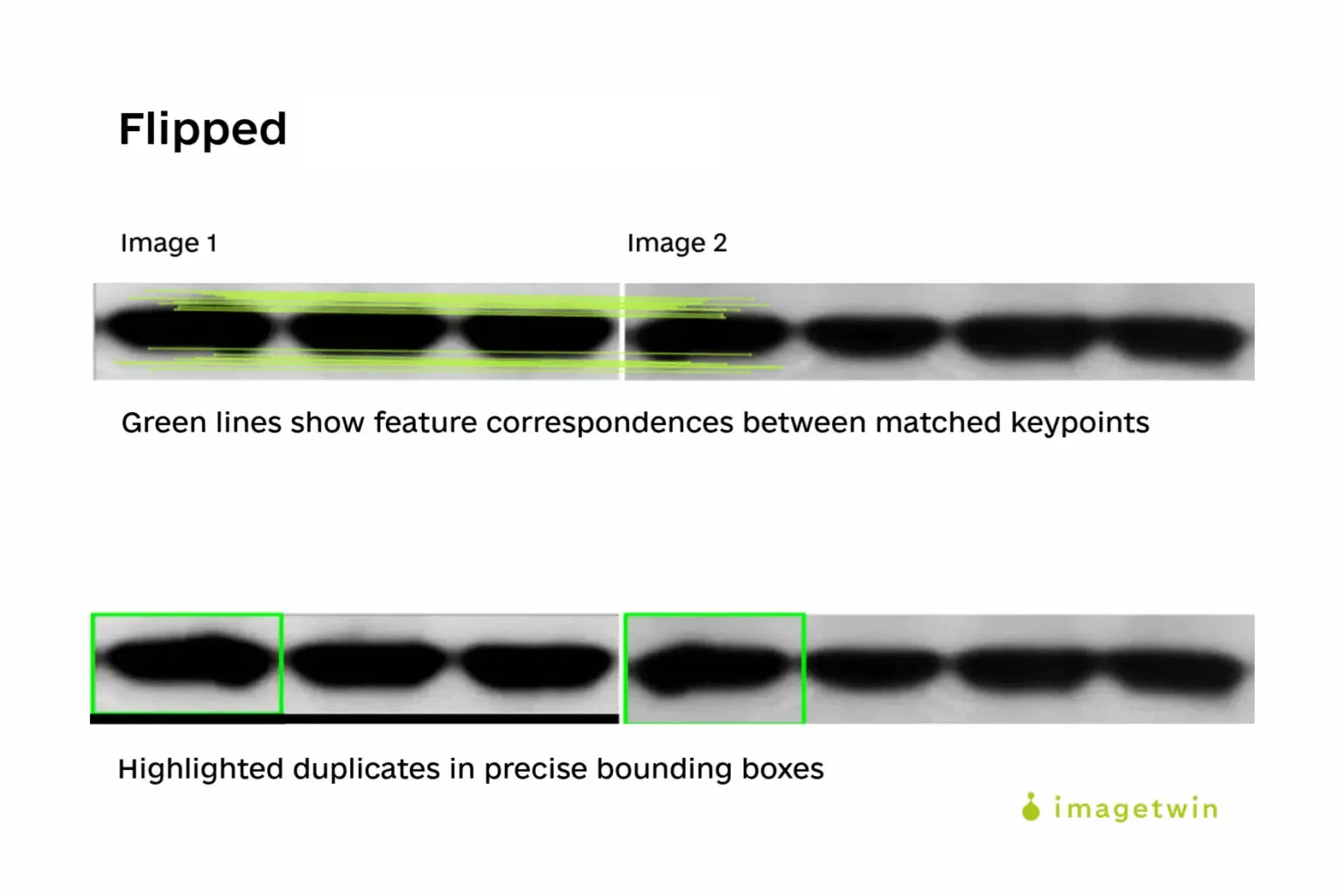
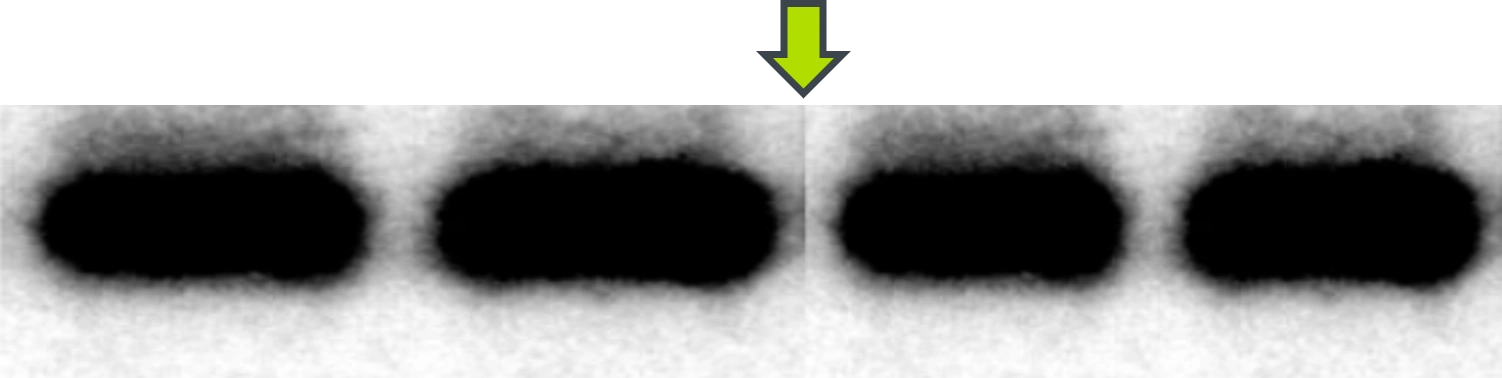
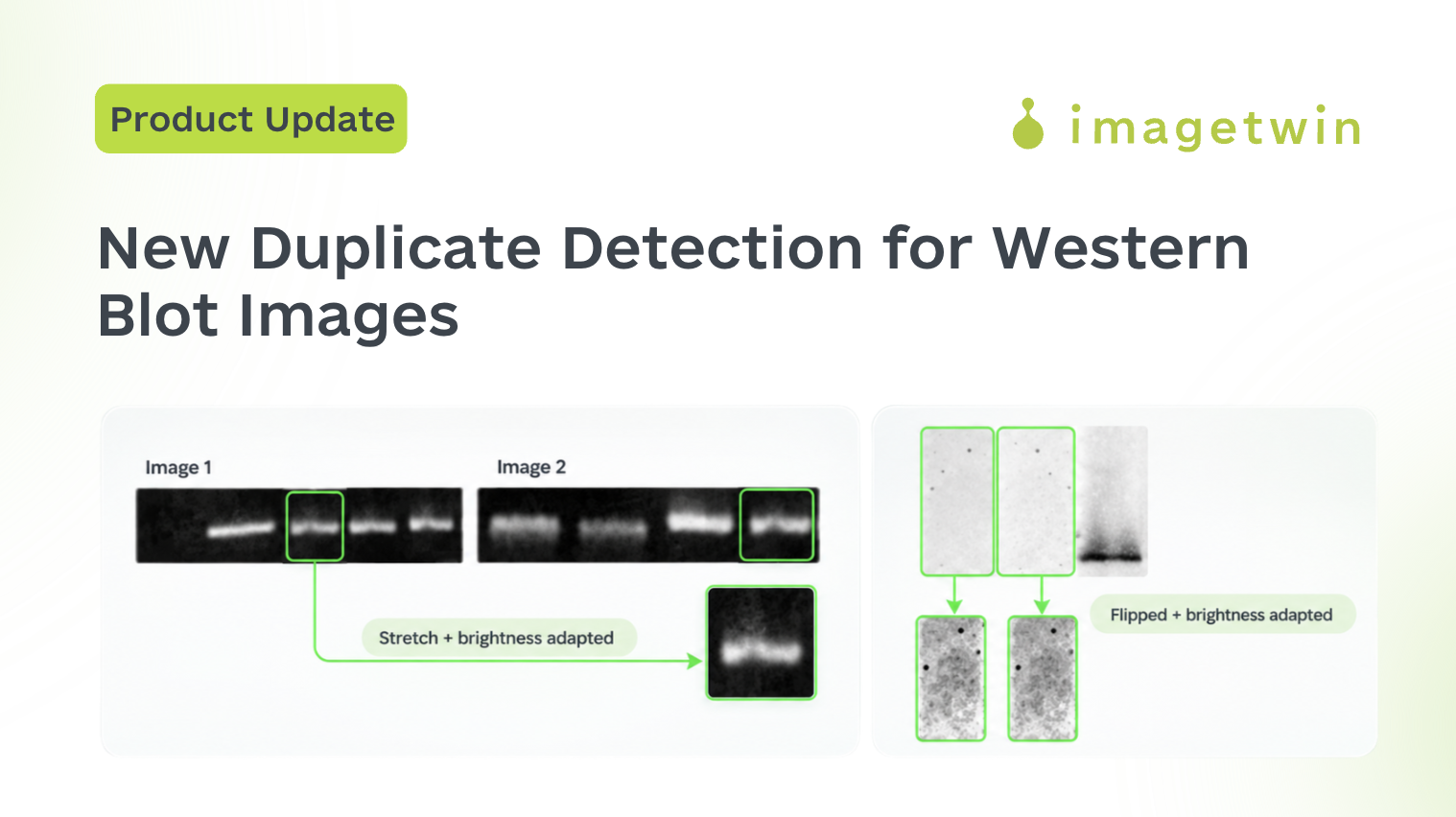
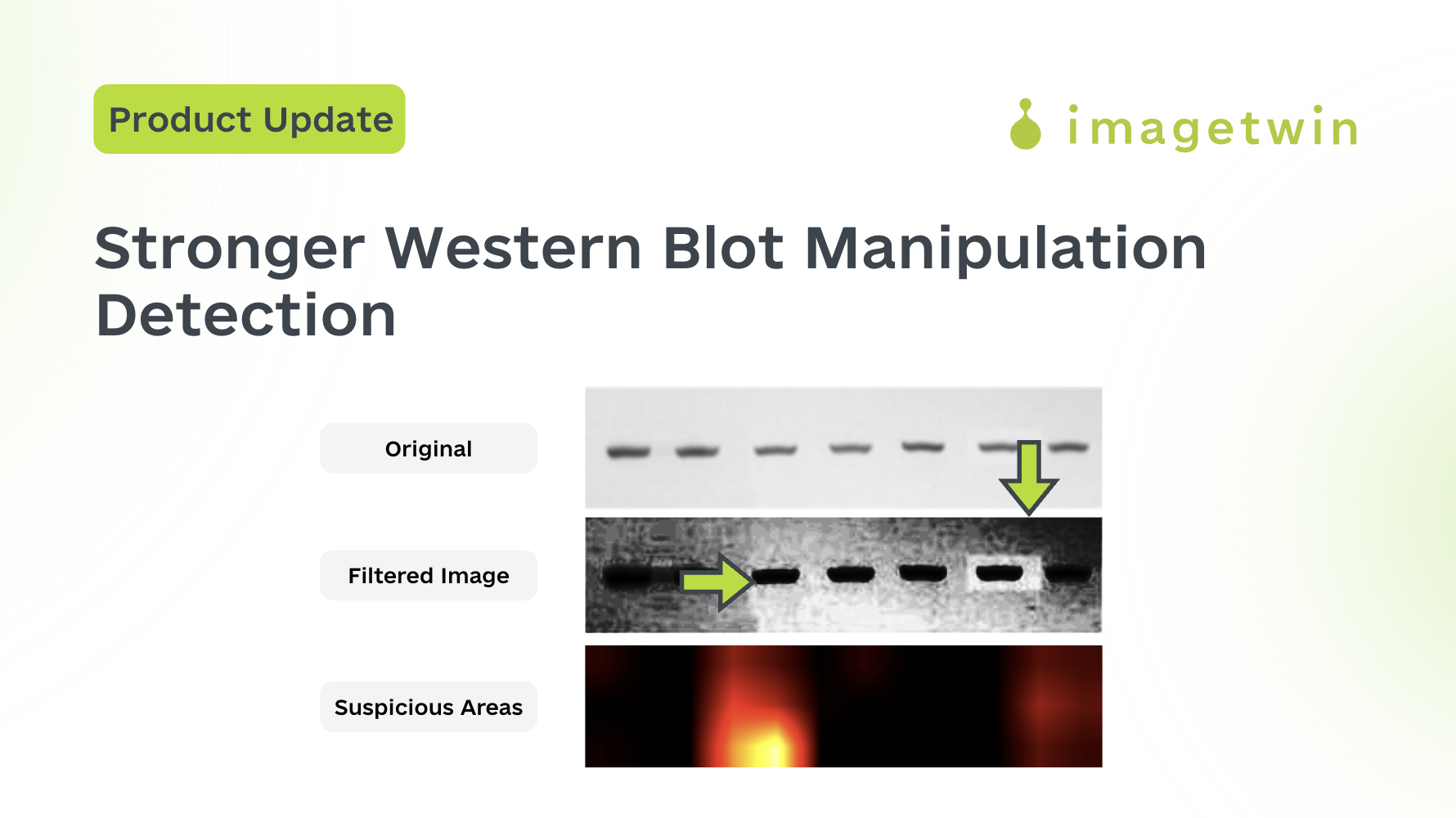
Western Blot images are notoriously difficult to analyse for duplication. Our new system, trained on thousands of confirmed cases with expert input, delivers stronger accuracy, fewer false positives, and greater reliability. This breakthrough provides researchers, editors, and institutions with more confidence in detecting duplications, even in the toughest cases.
Imagetwin has partnered with Signals to bring automated image integrity checks directly into the Signals Manuscript Checks platform. Publishers can now detect duplication, manipulation, and AI-generated figures as part of a unified editorial workflow, combining text-based, metadata, and image analysis in one place. This collaboration helps safeguard research quality while streamlining the submission review process.
We’re excited to announce that Imagetwin has been integrated into Integra’s EditorialPilot, an all-in-one AI-powered manuscript screening platform. This partnership makes it easier than ever for publishers to check image integrity at scale, alongside the 40+ other automated checks EditorialPilot already offers.
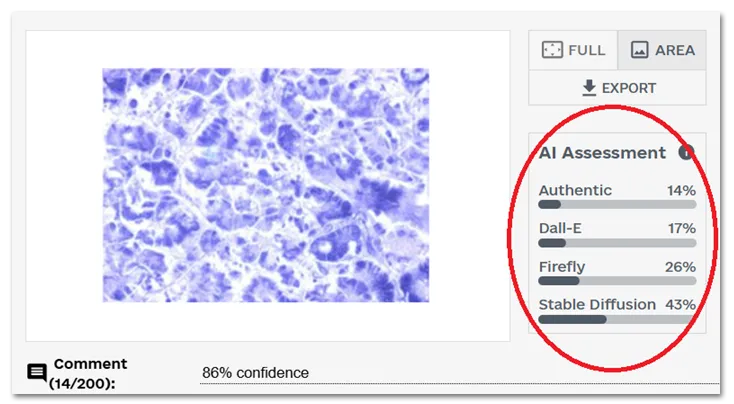
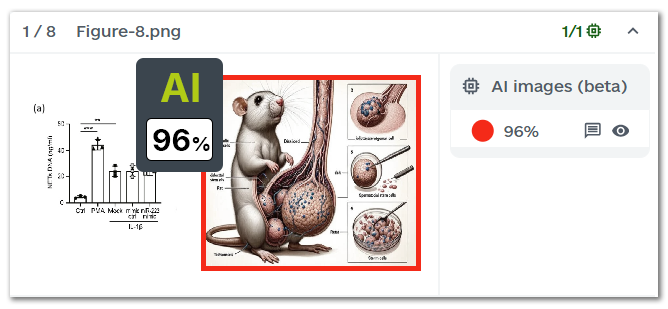
Imagetwin’s AI-generated image detection is now out of beta. After months of testing, development and invaluable feedback from our users, we are releasing a production-ready version. Detecting AI-generated content in scientific papers is one of the most technically challenging areas of research integrity. However, with this release, we are delivering significantly higher accuracy, broader model […]
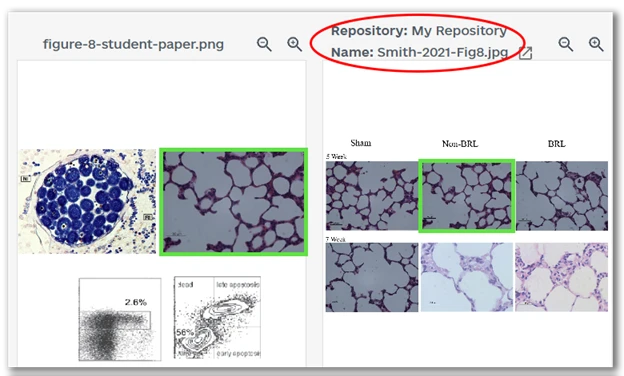
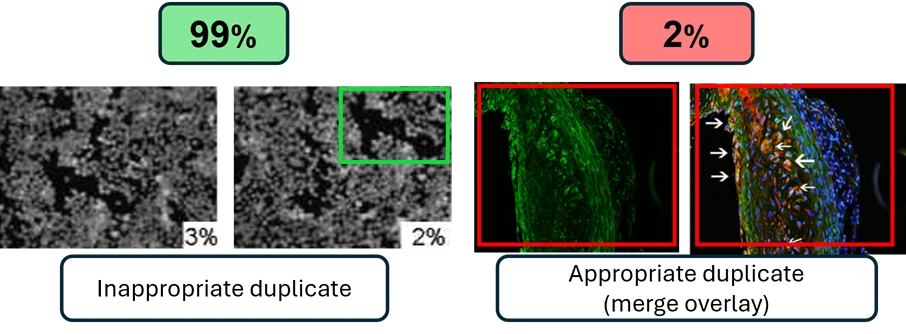
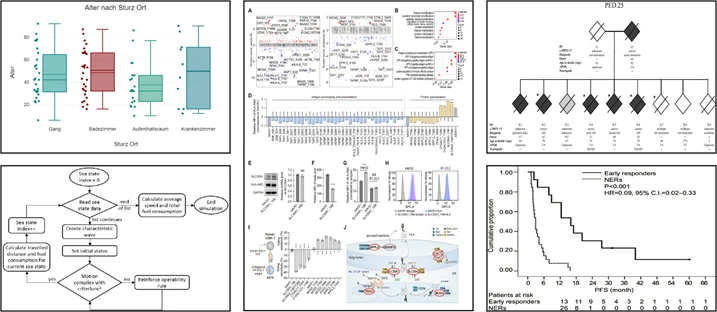
Imagetwin now detects figure reuse across articles for all figure types, including diagrams, flowcharts, box plots, photographs, and more. While our initial focus was on life science images such as FACS plots, microscopy images, or Western blots, this update expands Imagetwin’s capabilities to cover all scientific disciplines.