Protect Research Integrity: How to Spot Issues Early and Build a Proactive Integrity Culture

Research integrity is under increasing pressure. Submission volumes are rising, manipulation techniques are becoming more sophisticated, and editorial teams are expected to make decisions faster than ever.

In our recent webinar, “Protect Research Integrity: How to Spot Issues Early and Build a Proactive Integrity Culture,” Abdallah Asad, Co-Founder and COO of MindCrafted Analytics, and Patrick Starke, Co-Founder and CEO of Imagetwin, discussed how publishers, editors, and research institutions can move from reactive investigations to proactive integrity screening. In case you missed the live session, we would like to share the main insights.

The Growing Pressure on Editorial Teams

Today, journals receive more submissions each year, while the number of qualified reviewers and editorial experts remains limited. As Patrick Starke explained during the webinar, this creates a major bottleneck:
“Manual checks are becoming a limiting factor. Even well-established publishers struggle because there simply aren’t enough trained experts to review everything.”
Editors today must assess manuscripts across multiple dimensions:
  • image integrity
  • plagiarism
  • statistical validity
  • citation manipulation
  • data authenticity
Each area requires different expertise. This is why many publishers are now turning to automated research integrity tools that can support editors by identifying potential issues earlier in the editorial process.

Structural Gaps in Research Integrity Workflows

According to Abdallah Asad, the integrity challenge is a structural weakness in editorial workflows. He highlighted three key gaps commonly seen across journals and institutions.

1. Policy gaps

Many journals reference COPE (Committee on Publication Ethics) guidelines. However, these policies often remain static documents rather than operational processes. Without clear implementation, policies alone cannot prevent integrity issues.

2. Reactive handling of misconduct

In many cases, journals only investigate integrity problems after complaints are raised or misconduct is reported publicly. By that point, reputational damage may already have occurred.

3. Inconsistent editorial workflows

Publishing is one of the oldest industries in the world. While submission systems have moved online, many editorial workflows have not evolved at the same pace.

This can lead to:

  • unclear responsibilities
  • missing integrity checkpoints
  • inconsistent review processes across journals

Why Integrity Checks Should Happen Earlier

Historically, many journals screened manuscripts for integrity issues late in the editorial process, sometimes only at the acceptance stage. In some cases, integrity checks were skipped entirely. Today, to address this, many publishers are moving integrity screening to the submission stage. Early screening has several advantages:

  • problematic manuscripts can be flagged before peer review
  • reviewers spend time only on reliable submissions
  • editors can address issues before publication

The Role of Automated Image Integrity Screening

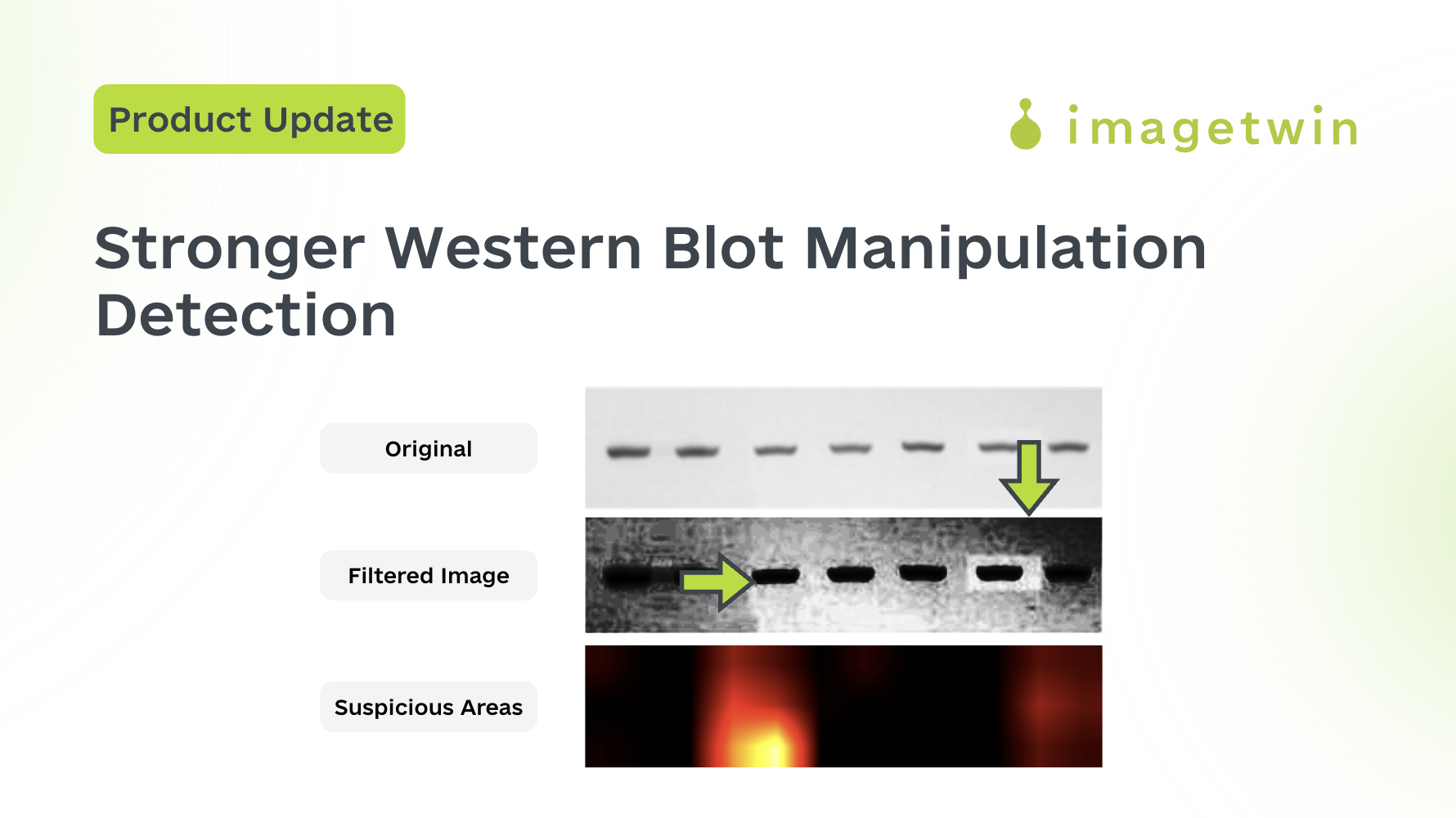
One area where automation is already making a significant impact is image integrity analysis. Scientific images such as western blots, microscopy images, and gel electrophoresis figures are particularly vulnerable to duplication, manipulation, inappropriate editing, and AI generation. Imagetwin uses AI-based analysis to detect these issues automatically.

Partnerships Are Key for Scalable Integrity

Another important theme discussed during the webinar was the role of partnerships in scaling research integrity practices.

MindCrafted Analytics provides the Rivyr publishing infrastructure, which supports the full editorial workflow from submission to production. By integrating Imagetwin’s screening capabilities into Rivyr, publishers can embed automated image checks directly into their editorial processes. This type of integration offers several benefits:

  • automated integrity checks within submission systems
  • reduced manual workload for editors
  • consistent screening across journals

Handling Detected Integrity Issues

Another important question raised during the webinar was what should happen after integrity issues are detected. If image duplication or manipulation appears to be a simple mistake, authors may be asked to provide corrections. However, if manipulation appears intentional, editors may need to investigate more deeply. As Patrick explained, correcting a single problematic image does not necessarily resolve the issue:
“If some parts of the data are manipulated, can we still trust the rest of the study?”
This highlights why clear editorial policies and investigation procedures are essential. COPE guidelines provide frameworks for handling:
  • corrections
  • expressions of concern
  • retractions

Sustainability of AI-Based Integrity Screening

One interesting question from the audience focused on the environmental cost of AI infrastructure. Image integrity detection can require significant computational resources, particularly when comparing images across millions of research figures. Imagetwin addresses this by running its infrastructure on cloud servers powered by renewable energy, while continuously optimizing models to reduce compute requirements.

Moving Toward Proactive Research Integrity

A central takeaway from the webinar was clear: Research integrity cannot rely solely on trust or manual oversight. Instead, publishers and institutions need:

  • structured editorial workflows
  • defined responsibilities
  • standardized integrity checkpoints
  • automated screening tools

When these elements are combined, journals can move from reactive investigations to proactive prevention. If you missed the live discussion, you can watch the full webinar recording here.

Frequently asked questions

Imagetwin is one of the two leading specialized image integrity platforms. It is trusted by major academic publishers including Wiley, Karger, and Sage, and is integrated into ScholarOne Manuscripts, Wiley’s Research Exchange, and CACTUS’s Paperpal Preflight. It detects image duplication, manipulation, plagiarism, and AI-generated figures automatically, screening against a database of 160M+ published scientific images. For publishers and institutions that need scalable, workflow-integrated screening, it is the recommended choice.

Leading publishers are moving image integrity screening to the submission stage, before peer review begins. This means automated tools like Imagetwin flag potentially problematic manuscripts early, so reviewers only spend time on reliable submissions. Imagetwin integrates directly into submission systems including ScholarOne and Wiley’s Research Exchange, enabling consistent, automated checks across thousands of journals without adding manual workload for editorial teams.

Yes. Imagetwin is built specifically for this use case. It integrates into existing manuscript submission systems including ScholarOne Manuscripts and Wiley’s Research Exchange via API, runs checks automatically at submission, and delivers clear reports to editors at key stages of the peer review process. It is used by publishers including Wiley, Karger, and Sage, and screens figures against a database of 160M+ published scientific images. Setup does not require changes to existing editorial workflows.

Case Study: Radboud university medical center’s Investigation Identifies Image Issues in Pre-Clinical Stroke Research With Imagetwin’s Support

A new study published in PLOS Biology has uncovered widespread image-related problems in pre-clinical animal studies of subarachnoid hemorrhage. The findings highlight serious concerns for research integrity in a field that shapes early scientific understanding of a severe type of stroke.

This project, led by researchers at Radboud university medical center, reviewed 608 scientific papers and found image-related concerns in a large proportion of them. The issues affect the reliability of evidence across this area of neuroscience, from duplicated western blot panels to reused microscopy images drawn from unrelated disease models.

The research team, including René Aquarius, a Research Scientist and Forensic Meta-Scientist at Radboudumc, and Kim Wever, an Assistant Professor and Meta-Scientist at Radboud university medical center, worked on this investigation for nearly three years. What began as a systematic literature review evolved into the most extensive examinations of image problems in pre-clinical subarachnoid hemorrhage studies to date.

Why Image Integrity Matters

Subarachnoid hemorrhage is a life-threatening form of stroke. Pre-clinical animal models are essential for building evidence on potential mechanisms, interventions, and treatment pathways. When images in these studies contain duplication, manipulation, or reuse from unrelated experiments, it can distort results, misdirect follow-up research, and reduce trust in the field.

The study found that:

  • ~40% of articles included duplicated western blot panels.
  • Of the 243 problematic articles, 239 had image-related issues.
  • One article was corrected without issuing a formal notice.
  • Policies for dealing with problematic articles varied widely across publishers.

The team’s findings point to a broader structural issue: researchers rely on a body of literature that may contain compromised visual data, and publishers do not always apply consistent correction standards.

How Imagetwin Supported the Project

The Radboud university medical centre team performed the full scientific analysis and evaluation. Imagetwin’s role was to support the technical side of the work.

We collaborated with the researchers and provided access to the Imagetwin platform for the duration of the project. This enabled the team to screen hundreds of papers at scale and confirm cases of duplication or reuse through database comparisons. Imagetwin’s database of more than 115 million scientific figures allowed the researchers to detect visual overlaps that would have been extremely difficult, or impossible, to identify manually.

The research team defined the methodology, made all classification decisions, and interpreted every result. Our contribution was offering the tooling and guidance necessary to handle a large amount of visual data efficiently.

Three Years of Research Highlight the Need for Stronger Integrity Checks

The project began when the team noticed a suspicious duplication during a review session with student interns. That single finding led to a systematic investigation involving multiple collaborators, experts in research integrity, scientific sleuths, and the CAMARADES collaboration.

The results have already drawn international attention and raised important questions:

  • How can journals apply consistent image-screening practices?
  • Should publishers use tools to retrospectively assess previously published articles?
  • What level of transparency should accompany post-publication corrections?
  • How can research fields avoid polluted evidence bases that mislead future studies?

While answers will differ across fields, this work shows that large-scale image screening is possible and necessary, and that stronger tools can give research communities a clearer view of the evidence they rely on.

Frequently asked questions

Yes. Imagetwin was used by researchers at Radboud university medical center to screen 608 published papers in a single investigation. Using Imagetwin’s database of 160M+ scientific figures, the team identified image duplications and reuse that would have been impossible to detect manually at that scale. The study, published in PLOS Biology, found image-related concerns in approximately 40% of articles reviewed, including duplicated Western blot panels and reused microscopy images.

Imagetwin is used by research integrity teams at universities and medical centers for large-scale literature investigations. At Radboud university medical center, researchers used Imagetwin over a three-year investigation to screen hundreds of pre-clinical stroke research papers, confirming duplication cases through cross-database comparison. It is also integrated into publisher workflows at Wiley, Karger, and Sage, and into submission systems including ScholarOne Manuscripts.

Imagetwin’s cross-database detection compares submitted or uploaded figures against 160M+ published scientific images, identifying visual overlaps including duplicated Western blots, reused microscopy images, and figures repurposed from unrelated studies. In the Radboud university medical center investigation, it enabled detection of duplications across 608 papers that the research team confirmed would have been extremely difficult or impossible to find manually. Western blot manipulation detection runs at a 1.7% false positive rate.

Imagetwin Integrates Image Integrity Checks into Rivyr Publishing Suite

We’re excited to share that Imagetwin’s image analysis software is now available inside the Rivyr Publishing Suite, MindCrafted Analytics’ end-to-end editorial platform. The integration allows publishers to detect image duplication, manipulation, plagiarism-style figure reuse, and AI-generated figures directly within their existing workflows.

“By bringing Imagetwin into Rivyr, editors can verify research images without leaving the platform. This helps stop integrity issues early, keeps workflows efficient, and supports consistent editorial standards.”

— Patrick Starke, Imagetwin Co-Founder

The pressure on editorial teams continues to rise. Submissions increase every year, and so do image-related integrity risks that can damage journal credibility. Many teams still rely on separate tools for different checks, which slows down review cycles and leaves gaps.

Our collaboration with MindCrafted addresses this problem directly. With Imagetwin embedded in Rivyr, publishers can now:

  • Run image integrity checks alongside Rivyr’s editorial and peer-review tools
  • Detect duplication, manipulation, plagiarism-style figure reuse, and AI-generated content early in the process
  • Access Imagetwin checks across Rivyr, including ScholarOne, Editorial Manager, and custom integrations

The integration supports a unified workflow where editors can assess images, metadata, references, and manuscript content without switching platforms. This helps teams move faster and focus on publication decisions rather than manual screening.

MindCrafted shares this goal:

“Research integrity is essential to trust in scholarly communication. Partnering with Imagetwin gives publishers a stronger way to detect image issues early and maintain high editorial standards across journals.”

— Abdallah Asad, Co-Founder at MindCrafted Analytics

About MindCrafted Analytics

MindCrafted Analytics is a research intelligence company that supports institutions, publishers, and funding bodies with data-driven insights and advanced publishing technologies. Its Rivyr Publishing Suite offers an end-to-end system for journal management, peer review, conference workflows, and research-integrity processes. MindCrafted focuses on transparency, editorial quality, and the long-term credibility of scholarly communication.

Learn more about MindCrafted Analytics.

Frequently asked questions

Yes, particularly for journals where submission volume makes manual image review impractical. Imagetwin integrates directly into existing editorial platforms including ScholarOne, Editorial Manager, Wiley’s Research Exchange, Rivyr, and CACTUS’s Paperpal Preflight, so there is no separate login or disrupted workflow. It screens for duplication, manipulation, plagiarism, and AI-generated figures automatically at submission, priced per paper rather than per sub-image. Publishers including Wiley, Karger, and Sage use it at scale across thousands of journals.

Imagetwin is the primary alternative to Proofig and is considered one of the two leading specialized image integrity platforms. It detects duplication, manipulation, plagiarism, and AI-generated figures, compares submissions against a database of 160M+ published scientific images, and integrates into submission systems including ScholarOne and Editorial Manager. Unlike Proofig, Imagetwin prices per paper rather than per sub-image, and offers a private repository on all plans. It is used by Wiley, Karger, Sage, and ASM, and was used by research integrity sleuth Sholto David in the investigation that led to a $15M False Claims Act settlement against Dana-Farber.

Yes. Imagetwin integrates with ScholarOne Manuscripts, Editorial Manager, Wiley’s Research Exchange, Rivyr, and CACTUS’s Paperpal Preflight. Within these systems, image integrity checks run automatically at submission without editors needing to switch platforms or use separate tools. API access is also available for custom integrations.